
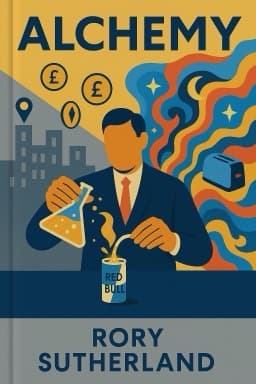
Small Changes, Big Magic: How Tiny Tweaks Transform Businesses
The Counterintuitive Power of Testing the Ridiculous

Logic says that big results require big changes. But Rory Sutherland’s 'Alchemy' proves the opposite: sometimes, the smallest, silliest tweaks can create the biggest impact. Why? Because human behavior is driven by emotion, context, and subconscious cues, not by rational calculation.
Consider the story of a website that added one trivial option to its checkout process. Logic said it wouldn’t matter. But the result? Over $300 million in new sales. Or the company that changed just four words in its call center script—suddenly, conversions doubled. These aren’t flukes; they’re the predictable result of experimenting with the irrational.
The lesson is clear: if you want to innovate, you must be willing to test what logic says is irrelevant. Most breakthroughs come from the margins, from ideas that seem too small, too weird, or too emotional to matter. But when you experiment boldly and measure honestly, you’ll discover that magic is hiding in plain sight.
To create a culture of experimentation, celebrate smart failures, encourage silly questions, and make it safe to try the unexpected. The future belongs to those who test the ridiculous—and find gold.
References: Sutherland, R. (2019). Alchemy: The Surprising Power of Ideas That Don't Make Sense. 2 3 4
Want to explore more insights from this book?
Read the full book summary