Welcome, dear friend, to a journey into the invisible forces that shape our world—forces more mysterious than mere logic can grasp. Imagine waking up one morning and reaching for your favorite drink. Is it the taste, the price, or something less tangible that draws you in? In this first section, we unravel why the world’s most successful ideas often make no sense—at least not to the logical mind.
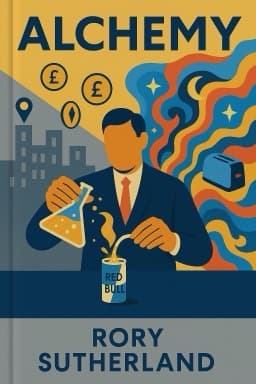
Let’s start with a drink that defied all expectations. In taste tests, people recoiled from it, calling it 'disgusting.' Logic would say such a product was doomed. Yet, this very drink became a global phenomenon, its tiny can and high price only fueling its mystique. The lesson? Perception, narrative, and context can create magic where logic sees only failure.
Now, consider the humble charity envelope. You might think that offering a tax rebate or a logical incentive would boost donations. In reality, when charities made their envelopes thicker, mentioned that volunteers delivered them, or changed their orientation, donations soared. But when they appealed to rationality alone—promising extra money through tax rebates—giving plummeted. We respond to the feeling of care, effort, and human touch, not just to rational arguments.
At the heart of these stories is a concept the author calls 'psycho-logic.' Unlike the cold certainty of mathematics, psycho-logic is messy, emotional, and deeply human. It is why we buy brands, why we cherish traditions, and why we sometimes pay more for less. The logical mind seeks certainty and universality, but the psycho-logical mind thrives on context, story, and surprise.
As you listen, remember: the world is not a spreadsheet. It is a living, breathing tapestry of feelings, habits, and hidden motivations. The opposite of a good idea can also be a good idea. What matters is not always what makes sense, but what feels right.
Let’s continue our journey, as we explore why even the best-laid plans of logic can falter, and how a touch of magic can change everything.