
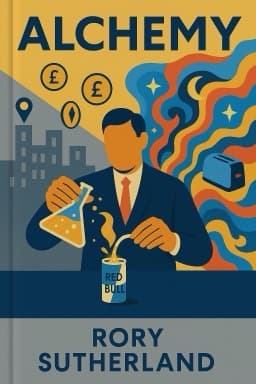
Why Logic Fails: The Magical Secrets Behind Human Decision-Making
Discover Why Your Brain Loves Magic More Than Math

In a world obsessed with data, spreadsheets, and rational analysis, Rory Sutherland’s 'Alchemy' is a delightful rebellion. The book’s core message is simple but profound: logic alone cannot explain or predict the most important choices people make. In fact, the most successful ideas in business, marketing, and culture are often those that make no sense—at least not to the logical mind. Instead, they appeal to what Sutherland calls 'psycho-logic,' the hidden logic of emotion, context, and perception.
Take, for example, the story of Red Bull. In blind taste tests, people found it 'disgusting.' Logic would say such a product was doomed. But Red Bull became a global phenomenon, its tiny can and high price only adding to its mystique. The lesson? Perception, narrative, and context can create magic where logic sees only failure.
Or consider the humble charity envelope. Charities found that using thicker paper or mentioning that volunteers delivered the envelopes increased donations by over 10%. Yet, when they made a logical appeal—offering a tax rebate—giving actually dropped. We respond to the feeling of care, effort, and human touch, not just rational arguments.
This is not just a marketing trick. Sutherland argues that all of us, every day, make decisions that are more about signaling, emotion, and context than about pure logic. We buy luxury goods not just for quality, but to signal status. We choose brands, rituals, and even places to live based on stories, not spreadsheets.
If you want to influence people, solve tough problems, or spark innovation, you need to think like an alchemist. That means embracing the irrational, experimenting boldly, and trusting in the power of perception. As Sutherland famously says, 'The opposite of a good idea can also be a good idea.'
So next time you face a stubborn problem, ask yourself: what would an alchemist do?
Key Takeaways:
- Logic is a great servant but a poor master. The best ideas often make no sense on paper.
- Psycho-logic—emotion, context, and perception—drives most human behavior.
- Small, seemingly irrational changes (like charity envelope thickness) can have huge effects.
- Success comes from experimenting with counterintuitive ideas, not just following best practices.
Ready to see the world differently? Keep reading for more magical secrets from 'Alchemy.'
References: Sutherland, R. (2019). Alchemy: The Surprising Power of Ideas That Don't Make Sense.
1
2
3
Want to explore more insights from this book?
Read the full book summary