
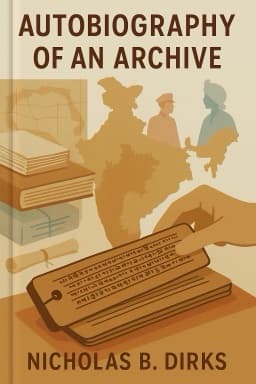
The Hidden Power of Archives: How Colonial India’s Past Shapes Our Future
Why archives are more than just old papers—they are battlegrounds of memory, authority, and identity.

Archives often evoke images of dusty shelves and forgotten documents, but Nicholas Dirks reveals a far more complex reality. In The Idea of South Asia, archives emerge as powerful monuments—both physical and ideological—that serve the interests of states and empires. Far from being passive containers of history, they are active battlegrounds where memory, authority, and identity are constructed and contested.
Dirks focuses on the Mackenzie Collection, amassed by Colin Mackenzie in early 19th-century South India. This vast trove of maps, manuscripts, and inscriptions was collected with the dual aim of scholarly preservation and imperial control. The collaboration between Mackenzie and his Indian assistants was crucial, yet colonial historiography often erased the contributions of these native experts, reflecting racial and institutional hierarchies.
The colonial archive shaped how history was written and understood. It enabled the British to classify populations, legitimize land claims, and monitor social groups. The transformation of caste into a rigid, bureaucratically defined system was facilitated by archival records and ethnographic studies conducted under colonial auspices. Ritual practices, too, were scrutinized and regulated, with some, like the hookswinging ceremony, becoming flashpoints of cultural conflict.
Understanding archives as instruments of power challenges us to rethink the nature of history itself. The stories preserved—and those omitted—reflect the interests and anxieties of those who created these records. Contemporary scholars must navigate these complexities to uncover marginalized voices and alternative narratives.
Dirks' work underscores the enduring impact of colonial archival practices on present-day South Asia and the global academic study of the region. It calls for critical engagement with archives as living sites where past and present intersect.
In sum, archives are not just about preserving history—they are about who controls history, how it is told, and for what purposes. This insight is vital for anyone seeking to understand the deep legacies of colonialism and the ongoing struggles over memory and identity in South Asia.
References: 1 3
Want to explore more insights from this book?
Read the full book summary