
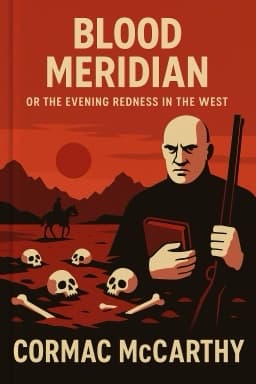
The Brutal Reality of the American Frontier: How Blood Meridian Rewrites the Western
A deep dive into the violent, lawless world of the 19th-century Southwest and its portrayal in Blood Meridian

The American Southwest in the mid-1800s was a land of extremes—harsh desert landscapes, fractured tribal nations, and a near-complete absence of law.
The Glanton Gang, central to the novel, was inspired by a real group of scalp hunters led by John Glanton. Armed with rare repeating firearms, they wielded a deadly technological edge that allowed them to dominate the frontier’s violent conflicts. Their raids and massacres left a trail of blood across the desert, illustrating the merciless nature of frontier justice.
Native American tribes such as the Comanche and Apache are portrayed with complexity, reflecting their diverse cultures, languages, and warrior traditions. These tribes were not monolithic; some were fierce raiders, others cautious farmers, but all were shaped by the harsh environment and the pressures of colonization and violence.
The Southwest itself emerges as a character—a vast, indifferent landscape of cracked earth, dry riverbeds, and star-filled skies. The terrain shapes the story’s tone, reinforcing themes of isolation, endurance, and the primal struggle between man and nature.
By grounding its narrative in historical fact while elevating it with mythic and poetic elements, Blood Meridian redefines the Western genre. It challenges readers to rethink the frontier not as a place of heroism and manifest destiny but as a crucible of human savagery and existential dread.
Want to explore more insights from this book?
Read the full book summary