
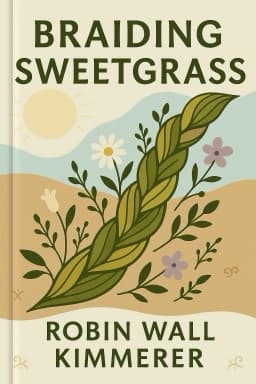
Why 'Braiding Sweetgrass' Will Change the Way You See Nature Forever
Discover the transformative power of indigenous knowledge and science intertwined in Robin Wall Kimmerer's masterpiece.

Imagine a world where every plant, animal, and even the land itself is recognized as a living, breathing relative. This is the worldview that Robin Wall Kimmerer invites us to embrace in her groundbreaking book, Braiding Sweetgrass. A botanist and member of the Citizen Potawatomi Nation, Kimmerer blends scientific rigor with indigenous wisdom to reveal a new way of relating to the earth—one rooted in reciprocity, gratitude, and respect.
At the heart of the book is the Skywoman creation story, an ancient myth that tells of the birth of Turtle Island. This story is not just a beautiful origin tale but a foundational lesson about cooperation and the gift economy of nature. Skywoman’s fall from the sky and the animals’ efforts to create land symbolize the interconnectedness of all beings and the importance of giving back to the earth. Sweetgrass, known as the hair of Mother Earth, emerges as a sacred plant that embodies this relationship, its braided form a metaphor for the interweaving of stories, knowledge, and life itself.
Kimmerer challenges the dominant Western worldview that sees nature as an object to be exploited. Instead, she introduces the concept of the grammar of animacy found in her native Potawatomi language, where plants, animals, and even natural phenomena are treated as persons. This linguistic insight reveals how language shapes perception and ethics, fostering a relational worldview where all beings are honored.
One of the most moving parts of the book is the Honorable Harvest, a code of ethics for gathering from the earth. It teaches us to take only what is given, use resources respectfully, give thanks, and give back. This principle stands in stark contrast to the wasteful consumption patterns prevalent today, offering a practical guide for sustainable living.
Kimmerer also explores the power of ceremony and gratitude, illustrating how simple acts—like pouring the first coffee of the day onto the ground—can reconnect us to the spirits of place and create a circle of belonging. The beauty of asters and goldenrod growing side by side exemplifies complementary relationships in nature, a visual and ecological metaphor for cooperation and mutual benefit.
Throughout the book, Kimmerer weaves stories of caution and hope, such as the Windigo legend warning against greed, and the People of Corn story emphasizing humility and gratitude. These narratives serve as moral compasses guiding us toward balance and healing.
Ultimately, Braiding Sweetgrass calls for a braiding of science, spirit, and story—a holistic approach that honors empirical knowledge and indigenous wisdom alike. This integration offers a hopeful path for ecological restoration and cultural renewal, inviting us all to become caretakers of the earth.
By reading this book, you will not only gain new insights about plants and ecology but also be inspired to transform your relationship with the natural world. It is a call to remember, to respect, and to act with love for the land we all share.
Sources: Litcharts, Deliberate Owl, Brevity Magazine, The Fisheries Blog 1 2 3 4
Want to explore more insights from this book?
Read the full book summary