
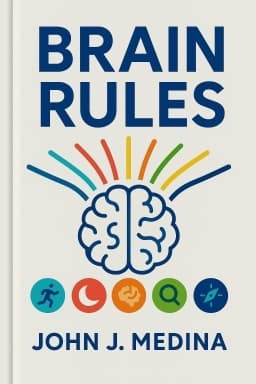
Unlock Your Brain’s Hidden Superpowers: 12 Brain Rules That Will Change Your Life
Discover the science-backed secrets to enhance your brain’s performance, from exercise to sleep and beyond.

Imagine if you could unlock the full potential of your brain by simply adjusting your daily habits. This is not science fiction but the core promise of 'Brain Rules,' a groundbreaking exploration into how our brains function and how we can optimize them for better memory, focus, and creativity. The brain, a three-pound organ, is the most complex system known to humans, consuming 20% of our body’s energy despite its small size. Yet, many of us neglect the very conditions that help it thrive.
Movement Fuels Brain Power
Our brains evolved for movement — our ancestors walked up to 12 miles a day, and this physical activity is essential for cognitive vitality. Regular aerobic exercise increases blood flow to the hippocampus, the brain’s memory center, fostering new neuron growth and improving mood by regulating neurotransmitters like serotonin and dopamine. Studies show that even 30 minutes of moderate exercise, two to three times a week, can reduce dementia risk by over 60% and boost learning in children. This connection between body and mind means that sitting all day at a desk is a recipe for mental decline. Incorporating movement breaks or active learning strategies can dramatically enhance brain function.
Evolution Shaped Our Adaptive Brains
The human brain did not evolve for comfort but for survival in a constantly changing environment. Climate variability demanded flexible problem-solving over brute strength. This evolutionary pressure led to the development of symbolic reasoning—the ability to hold abstract concepts and use language and tools. Walking upright freed our hands and energy, enabling tool use and brain expansion. Our brains are layered cities, with ancient survival circuits beneath newer, complex cognitive functions. This layered architecture explains why we sometimes act on instinct despite our rational intentions.
Every Brain is Unique
Despite identical genetics, no two brains are wired the same. Experience shapes neuronal connections, strengthening some and pruning others. This plasticity means that learning physically changes brain structure. For example, specialized neurons respond selectively to familiar faces, demonstrating personalized brain wiring. Brain development surges twice—in toddlerhood and adolescence—followed by pruning, shaping personality and cognitive abilities. Recognizing diverse intelligences beyond IQ opens doors to tailored education and work environments.
The Battle for Attention
Attention is a limited resource; people typically lose focus after about 10 minutes without engaging stimuli. Emotion is a powerful magnet for attention, releasing dopamine and marking memories as important. Multitasking is a myth—switching between tasks reduces efficiency and increases errors. Designing learning and work environments that respect attention spans and incorporate emotional relevance enhances productivity.
Memory: Repeat and Rest
Memories begin fragile and fade rapidly without repetition. Spaced repetition strengthens neural pathways, making memories durable. Sleep plays a critical role by consolidating memories, transferring them from short-term to long-term storage. Even brief naps can boost cognitive performance by over 30%. Memory storage is distributed across brain regions, making it flexible but susceptible to distortion.
Sleep is Brain Fuel
Sleep is an active state where the brain processes and consolidates information. Napping improves alertness and problem-solving significantly. Circadian rhythms influence when individuals perform best cognitively. Prioritizing quality sleep is essential for optimal brain function.
Stress Sabotages Learning
While acute stress activates survival mechanisms, chronic stress floods the brain with cortisol, damaging the hippocampus and impairing memory formation. Supportive environments and control reduce stress impact, improving learning and mental health. Managing stress is vital for cognitive resilience.
Engage All Senses
The brain integrates multisensory information to create richer memories. Smell uniquely triggers emotional memories by bypassing the thalamus and directly activating limbic centers. Educational methods incorporating visual, auditory, tactile, and olfactory stimuli improve retention and engagement.
Vision, Gender, and Curiosity
Vision consumes half the brain’s resources, making it dominant in perception and memory. Male and female brains show structural and functional differences influencing cognition and behavior. Innate curiosity drives lifelong exploration and learning, fueling creativity and adaptation.
By understanding and applying these brain rules, we can design our lives, schools, and workplaces to maximize mental potential, creativity, and happiness. Your brain is your most valuable asset—treat it with the care and respect it deserves.
Sources: Blinkist summary, ReadersBooksClub, ReadItForMe, Washington State University Media Kit 1 2 3 4
Want to explore more insights from this book?
Read the full book summary