
Freak Shows, Race, and the Grotesque: America’s Dark Spectacles Revealed
How racialized freak shows exposed America’s hypocrisies and shaped cultural identities in the 19th century.

The 19th century was a time when the human body became a stage for cultural anxieties, especially around race. Freak shows and racial spectacles were not just entertainment; they were powerful reflections of America’s social contradictions. Joice Heth, a black woman exhibited as George Washington’s nursemaid at over 160 years old, was both mythologized and commodified, her display blurring lines between exploitation and performance.
Similarly, the 'What is It?' exhibit presented William Henry Johnson as a racial 'missing link,' caged and dehumanized under the guise of science. These exhibitions reinforced racial hierarchies and justified inequality through pseudoscience and spectacle.
The sideshows also featured the 'Circassian Beauty,' a symbol of threatened whiteness and purity, revealing the complex interplay of race, gender, and cultural fears. Audiences were both complicit and critical, engaging in a dance of power and vulnerability that echoes in contemporary cultural consciousness.
These grotesque spectacles expose the deep-rooted racial tensions in American history and challenge us to confront the legacy of exploitation and representation.
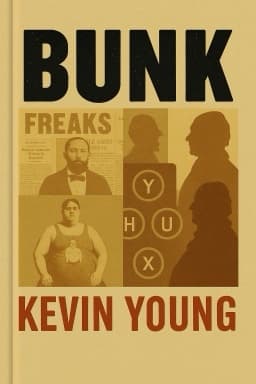
For further reading, Kevin Young’s "Bunk" provides an incisive exploration of these themes. 1 3 4
Want to explore more insights from this book?
Read the full book summary