
The Untold History of Humbug: How America Fell in Love with Deception
From P.T. Barnum’s Feejee Mermaid to the Moon Hoax—explore the origins of America’s fascination with humbug and hoaxes.

In 19th-century America, a new cultural phenomenon emerged — humbug — a form of deception that was as much about entertainment as it was about trickery. This era was marked by a fascination with spectacle and the blurring of truth and fiction, where audiences eagerly participated in the thrill of being fooled. At the center of this movement was P.T. Barnum, the showman whose American Museum was a hub for curiosities like the Feejee Mermaid, a grotesque amalgam of a monkey and fish that drew crowds eager to be amazed and deceived.
Meanwhile, newspapers capitalized on this appetite for wonder. The New York Sun’s Moon Hoax of 1835 is a prime example — a series of articles describing fantastic lunar creatures that captivated readers and dramatically boosted circulation. This hoax combined scientific language with fantasy, illustrating how the penny press thrived on sensationalism.
The key to humbug’s success was its social contract: unlike swindlers who cheat outright, humbugs entertain and leave audiences feeling the experience was worth their time, even if the truth was elusive. This cultural embrace of deception reveals much about America’s identity during a time of rapid change and uncertainty.
Understanding this history helps us see the roots of modern media sensationalism and the enduring human desire for stories that both dazzle and deceive.
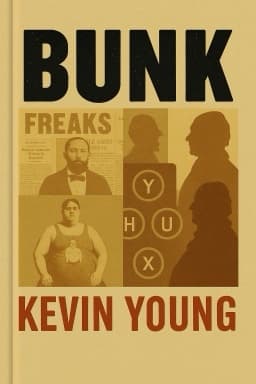
For more on this fascinating history, see Kevin Young’s "Bunk" and related analyses in major publications. 1 3 4
Want to explore more insights from this book?
Read the full book summary