
Why You’re Already Living in a World of Invisible Wealth: The Shocking Truth Behind Modern Capitalism
How Intangible Assets Have Quietly Taken Over—and What It Means for Your Future

How Intangible Assets Have Quietly Taken Over—and What It Means for Your Future
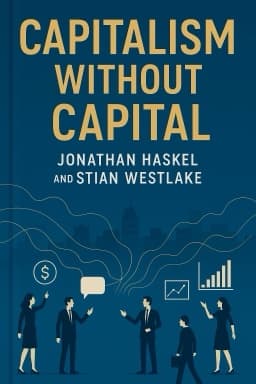
Imagine waking up one morning to discover that everything you thought you knew about wealth, business, and power was quietly turned upside down while you weren’t looking. That’s the central revelation in Jonathan Haskel and Stian Westlake’s groundbreaking book, Capitalism without Capital. In this new world, the most valuable assets are not factories, oil, or even real estate—they’re things you can’t see or touch: software, data, brands, and organizational know-how.
This is the age of the intangible economy. Since the mid-1990s, investment in intangible assets has outpaced investment in tangible ones in developed countries. The shift is subtle but profound. Your favorite streaming service, the algorithm behind your social feed, the brand that makes you choose one coffee shop over another—these are the new engines of growth, and they follow rules that are totally different from the old industrial age. Haskel and Westlake call them the Four S’s: Scalability (intangible assets can be used over and over at little extra cost), Sunkenness (once you invest in them, it’s hard to resell them), Spillovers (others can benefit from your innovation), and Synergies (combining intangibles multiplies their value).
The result? The most successful companies—think tech giants and global brands—can leap ahead, leaving competitors in the dust. But this also means bigger gaps between winners and losers, and new kinds of risks. Traditional banks struggle to fund intangible-heavy startups because you can’t seize a brand or an algorithm if a loan goes bad. Policy makers face a world where old measures like GDP and capital investment don’t tell the whole story anymore.
For individuals, this new landscape is both thrilling and daunting. Skills like creativity, collaboration, and adaptability matter more than ever. For entrepreneurs, the challenge is to build and protect intangible assets—and find investors who understand their value. For governments, the task is to update laws, education, and infrastructure to help everyone share in the benefits of the intangible revolution.
In short, Capitalism without Capital is not just a book about economics—it’s a wake-up call for anyone who wants to understand the invisible forces shaping our lives and futures. If you want to thrive in the world that’s coming (and already here), you need to learn the new language of value—before you get left behind. 1 2
Want to explore more insights from this book?
Read the full book summary