
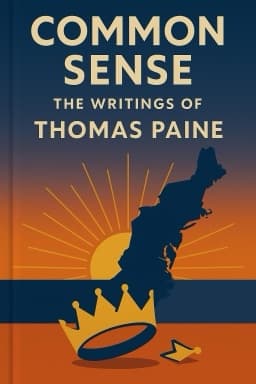
Why 'Common Sense' Still Matters: The Revolutionary Pamphlet That Changed the World
Discover how a fiery pamphlet ignited a revolution and reshaped democracy forever.

In the winter of 1776, a pamphlet appeared that would shake the foundations of an empire and ignite the spirit of revolution across thirteen American colonies.
At its core, 'Common Sense' challenges the legitimacy of monarchy and hereditary succession. Paine argued that no man is born with a divine right to rule others and that such claims breed tyranny and injustice. Instead, he advocated for a government based on the consent of the governed, where laws—not kings—hold supreme authority.
The pamphlet also distinguishes between society and government. Society, according to Paine, arises naturally from human needs and promotes happiness, whereas government is a necessary evil designed to restrain human vice. This nuanced understanding highlights the delicate balance between freedom and order, a tension central to any functioning democracy.
Moreover, Paine’s work addresses the practical realities facing the colonies. He emphasizes America’s readiness for independence, citing its abundant natural resources, growing military strength, and political maturity. He dismisses hopes for reconciliation with Britain as unrealistic, warning that continued submission only prolongs suffering and delays the inevitable birth of a new nation.
Perhaps most powerfully, 'Common Sense' appeals to the moral imperative of liberty. It portrays the struggle for independence as not merely political but deeply ethical, a fight against oppression that demands sacrifice and vigilance. Paine’s stirring prose and vivid examples gave voice to the frustrations and hopes of countless colonists, transforming scattered dissent into a unified movement.
Beyond its immediate impact, 'Common Sense' has left an enduring legacy. Its principles inspired democratic revolutions worldwide and continue to influence debates about governance, rights, and justice. The ideas of equality before the law, popular sovereignty, and the rule of law remain vital to contemporary political discourse.
In essence, 'Common Sense' is a testament to the power of ideas to change the course of history. It reminds us that freedom is not given but earned through courage, unity, and the unwavering pursuit of justice. As we reflect on its messages today, we see a call to uphold these ideals in our own time, ensuring that the flame of liberty continues to burn bright for generations to come.
Want to explore more insights from this book?
Read the full book summary