
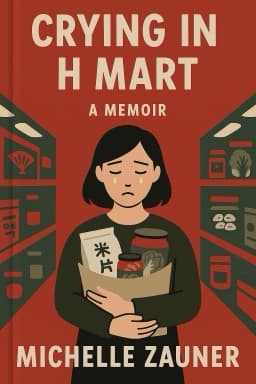
Why 'Crying in H Mart' Will Shatter Your Heart and Heal It Too
An Intimate Journey Through Loss, Food, and Identity That Will Stay With You Forever

Few memoirs manage to capture grief with such raw honesty while weaving in the rich tapestry of cultural identity and familial love. Michelle Zauner’s Crying in H Mart is one such rare gem. At its core, this is a story about loss — the devastating void left by the death of Zauner’s mother from a rare form of bile duct cancer. But it is also a story about connection, memory, and how food serves as a powerful conduit for love and identity.
Zauner’s journey begins in the aisles of H Mart, a Korean grocery store that becomes a sacred space where grief and heritage collide. The sensory experiences — the smell of kimchi, the texture of rice cakes, the sight of familiar packaging — trigger waves of sorrow and remembrance. Food here is not just nourishment but a language that expresses love beyond words, a way to keep her mother’s memory alive. This intimate connection between food and grief speaks to anyone who has found comfort or identity in the tastes of home.
But the memoir also explores the tensions of living between two cultures. Zauner’s Korean-American identity is fraught with challenges: the pressure to conform to traditional expectations, the struggle with language barriers, and the desire to belong in both worlds yet feel fully accepted in neither. The cultural nuances, from the importance of emotional restraint to the significance of beauty standards like the double eyelid, enrich the narrative and highlight the complexity of bicultural identity.
Central to the memoir is the intense, sometimes fraught, but deeply loving relationship between Zauner and her mother. The mother’s tough love and high expectations, shaped by Korean cultural values, create friction but also lay the foundation for strength and resilience. As Zauner becomes her mother’s caregiver during her illness, the memoir poignantly captures the physical and emotional toll of caregiving — the exhaustion, the hope, the moments of tenderness, and the profound vulnerability.
The story also embraces the healing power of creativity. Both mother and daughter find solace in artistic expression — painting, music, writing — which becomes a language to process grief and celebrate legacy. These creative acts transform sorrow into beauty and connection, offering a lifeline in the darkest moments.
Community and shared cultural rituals play a vital role in sustaining identity and offering comfort. The bustling Korean food courts and communal eating traditions depicted in the memoir emphasize how cultural spaces nurture belonging and emotional support, especially within diasporic communities.
Ultimately, Crying in H Mart is a testament to resilience and the enduring power of love. It teaches the importance of preserving a part of oneself amid caregiving and grief, of carrying forward family legacies through food and memory, and of embracing healing as a gradual, ongoing process. The memoir closes on a hopeful note, reminding us that love persists beyond loss and that healing is possible even in the face of profound sorrow.
This memoir is not only a tribute to Zauner’s mother but a universal story that resonates with anyone who has loved, lost, and sought to find themselves in the shadows of grief. It is a book that shatters the heart and mends it in equal measure.
For those interested in exploring grief, cultural identity, and the healing power of food and family, Crying in H Mart is a must-read that will stay with you long after the last page is turned.
Sources: Amazon Reviews 1 , Papersowl Analysis 2 , Iowa State Daily Book Review 3 , Tasteful Rude Review 4
Want to explore more insights from this book?
Read the full book summary