
Is War Between the US and China Inevitable? The Shocking Truth Behind the Thucydides Trap
Explore the explosive dynamic between a rising China and a ruling America, and why history warns us of looming conflict — but also how peace might still be possible.

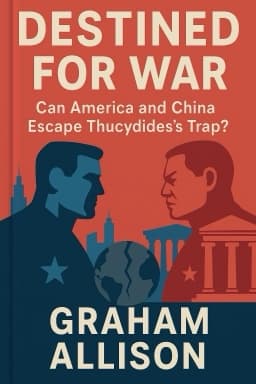
In the swirling tides of global power, a question haunts policymakers, scholars, and citizens alike: will the rising power of China inevitably clash with the established dominance of the United States, plunging the world into conflict? This question is at the heart of Graham Allison's seminal work, Destined for War, which introduces the chilling concept of the Thucydides Trap.
What is the Thucydides Trap? Named after the ancient Greek historian Thucydides, who chronicled the Peloponnesian War between Athens and Sparta, the Trap describes a structural dynamic where a rising power threatens to displace a ruling one, creating a dangerous tension that often leads to war. History is littered with sixteen such cases over five centuries, with twelve ending violently.
Allison’s analysis goes beyond mere historical curiosity. It is a warning and a guide for the 21st century, where China’s rapid economic growth, military modernization, and expanding global influence challenge America’s long-held supremacy. From the construction of skyscrapers at a pace that astonishes the world to the vast Belt and Road Initiative connecting continents, China’s rise is unprecedented.
The lessons of history are stark. The British-German rivalry before World War I, fueled by naval arms races and economic competition, spiraled into devastating global conflict. Similarly, Japan’s rapid modernization and collision with the United States in the Pacific culminated in World War II’s fiery outbreak. These cases underscore how fear, honor, and miscalculation can ignite wars that seem inevitable in hindsight.
Yet, the Cold War paradox offers hope. Despite intense rivalry and ideological hostility, the US and USSR avoided direct war through nuclear deterrence and careful diplomacy. This period teaches us that with wise leadership, respect for core interests, and robust communication, great powers can compete without catastrophe.
Cultural and ideological divides between the US and China add layers of complexity. Confucian values emphasizing harmony and hierarchy contrast with Western ideals of individualism and democracy. These differences shape perceptions and diplomatic interactions, often leading to misunderstandings.
Flashpoints such as the South China Sea disputes, Taiwan Strait tensions, cyber warfare, and trade conflicts represent real risks where small incidents could escalate dangerously. Understanding these fault lines is crucial for crafting strategies to reduce risk and build trust.
But history also provides clues for peace. Four out of sixteen historical power transitions avoided war through mutual accommodation, respect, and institutional frameworks. The 'Long Peace' since World War II and shared global challenges like climate change create incentives for cooperation rather than conflict.
Ultimately, the future is not predetermined. It depends on leadership choices, public awareness, and the willingness to learn from history’s brutal lessons. As Allison urges, we owe it to future generations to defy the odds and choose peace.
This blog has unpacked the core ideas of the Thucydides Trap and its implications for US-China relations, weaving together history, culture, and geopolitics to illuminate one of the most critical issues of our time. Understanding these dynamics is the first step toward shaping a safer, more peaceful world.
Want to explore more insights from this book?
Read the full book summary