
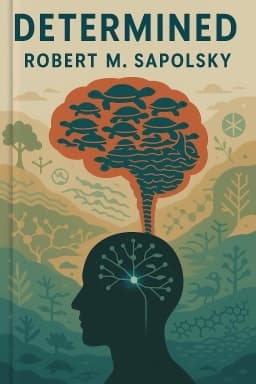
Breaking Down the Biology of Intent: How Hormones, Brain Development, and Culture Shape Who We Are
Explore the fascinating interplay of biology and culture that forms our intentions long before conscious thought.

Intentions—the decisions and desires that seem to arise from within—are often thought of as purely conscious acts of will. However, science reveals that these intentions are deeply rooted in biological and cultural soil, growing over years and shaped by myriad influences beyond our immediate awareness.
Hormones such as testosterone do not create new behaviors out of thin air but amplify tendencies already present. For instance, testosterone increases the likelihood of aggression or dominance behaviors but only within certain social contexts. Similarly, oxytocin enhances bonding and trust, predominantly within familiar groups, highlighting the biological basis for social affiliation and exclusion.
The brain’s development timeline further complicates the picture. The frontal cortex, responsible for impulse control and executive function, matures slowly, often not reaching full maturity until the mid-twenties. This delay explains why adolescence is marked by heightened risk-taking and emotional volatility. Synaptic pruning refines neural connections during this period, influenced heavily by environmental inputs and experiences.
Cultural factors add another rich layer. Societies differ in values and norms, which shape brain function and behavior across generations. Individualistic cultures emphasize autonomy and self-expression, while collectivist cultures prioritize harmony and interdependence. These differences are not merely social constructs but manifest in distinct neural activation patterns and behavioral tendencies.
Consider how historical ecological factors, like the demands of rice farming or pastoralism, have shaped social norms and brain development over centuries. These cultural imprints influence how intentions form and how behavior is regulated, demonstrating the inseparability of biology and culture.
Recognizing these intertwined influences helps us understand that what we perceive as free decisions are actually the culmination of biological, developmental, and cultural histories. This insight invites a more compassionate and scientifically informed perspective on human behavior, moving beyond simplistic notions of blame and choice.
Next, we will explore the myth of willpower and how biological constraints shape our capacity for self-control, further challenging the idea of limitless free choice.
Want to explore more insights from this book?
Read the full book summary