
Is Free Will Just an Illusion? Neuroscience Unveils the Truth Behind Our Choices
Discover how cutting-edge neuroscience challenges the very idea of free will and what it means for our understanding of human behavior.
For centuries, humans have cherished the belief that they are masters of their own fate, freely choosing their actions and shaping their lives. But what if this cherished notion is an illusion? Recent advances in neuroscience and philosophy have begun to unravel the mysteries of decision-making, revealing a startling truth: our brains often decide before we even realize it.
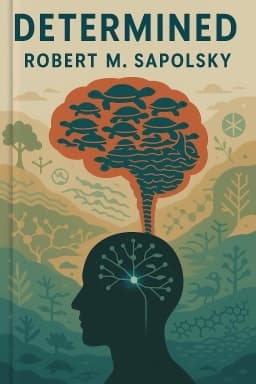
The metaphor of 'turtles all the way down' illustrates the infinite regress of causality—each event caused by a previous one, stretching endlessly back in time. This concept challenges the idea that there is a first uncaused cause or a moment of spontaneous free choice. Neuroscientific experiments measuring the brain's readiness potential demonstrate that neural activity signaling an upcoming action occurs hundreds of milliseconds before conscious awareness. In other words, the brain prepares for movement before we consciously decide to move.
This discovery shakes the foundation of free will and agency, suggesting that what we experience as conscious choice is a post hoc narrative constructed by our minds. For example, when people are asked to press a button at will, brain signals show preparation well before their reported moment of decision. This discrepancy reveals that our sense of control is more limited than we imagined.
Understanding this challenges societal notions of responsibility and morality, which often rely on the assumption of autonomous choice. If our actions are the inevitable outcomes of an endless chain of causes, what does it mean to hold someone morally accountable? This question opens a profound dialogue about justice, ethics, and human nature.
Yet, this revelation need not be despairing. Recognizing the biological and environmental roots of behavior invites compassion and a more nuanced approach to human actions. It encourages us to shift from blame to understanding, from punishment to rehabilitation.
In the following sections, we will explore how biology, culture, and brain development shape our intentions, how willpower operates within biological limits, and how complexity and chaos enrich our understanding of determinism. We will also delve into the implications for law, ethics, and healing, ultimately envisioning a hopeful future where knowledge fosters kindness and growth.
Join us on this journey into the depths of the mind and the nature of choice.
Want to explore more insights from this book?
Read the full book summary