
From Torture to Timetables: How Discipline and Punish Still Shapes Our World
Why Foucault’s Chilling History of Punishment Is More Relevant Than Ever

Why Foucault’s Chilling History of Punishment Is More Relevant Than Ever
Imagine standing in a crowded square in 1757, watching a brutal public execution. The air is thick with fear and fascination. This was not just punishment—it was a ritual, a spectacle, a performance of sovereign power. Fast forward two centuries, and punishment has become almost invisible, hidden behind prison walls, mediated through files, forms, and routines. What happened? Michel Foucault’s Discipline and Punish answers this question with chilling clarity, showing how the logic of punishment shifted from the body to the soul, from pain to correction, from the scaffold to the schoolroom.
Foucault begins with unforgettable detail: the execution of Damiens, torn apart by horses, a warning to all who would defy the king. But soon, the crowd disappears, the torture devices vanish, and a new regime of discipline emerges. The prison is born—not just as a building, but as a model for society. Here, order is maintained not by fear of pain, but by constant observation, measurement, and correction. The timetable replaces the whip. The bell replaces the brand. The body is no longer broken; it is trained, normalized, made ‘docile’—capable, productive, and obedient.
This transformation is not limited to prisons. Foucault traces the spread of disciplinary techniques into schools, hospitals, factories, and barracks. Everywhere, the same logic applies: routines, surveillance, examinations, and files. The military drill becomes the classroom roll call. The hospital patient is charted, measured, and compared. The factory worker’s every movement is timed and optimized. In each case, the goal is to produce individuals who are not just controlled, but who control themselves—internalizing the gaze of authority, becoming their own supervisors and judges.
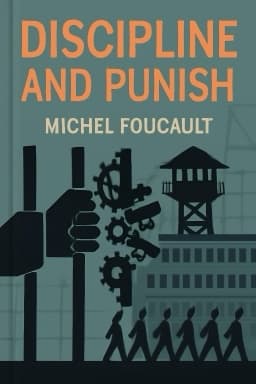
The panopticon, Jeremy Bentham’s infamous prison design, becomes the symbol of this new age. In the panopticon, a single watchman can observe all inmates without being seen. The result? The prisoners behave as if they are always watched, even when they are not. This principle, Foucault argues, is the secret of modern power: visibility as a trap, surveillance as a means of control, and self-regulation as the ultimate victory of discipline.
Today, Foucault’s insights ring truer than ever. Our schools, workplaces, and even our online lives are governed by invisible rules, constant monitoring, and relentless assessment. Social media platforms are digital panopticons, tracking every click, like, and comment. Algorithms sort us, files follow us, and the line between discipline and freedom grows ever thinner. Yet, as Foucault reminds us, where there is power, there is resistance. By understanding the history and mechanisms of discipline, we can begin to imagine new forms of agency, dignity, and hope. The story of punishment is not over—and the next chapter is ours to write.
References: Foucault, Discipline and Punish; see also Ethan Hein, Critical Theory Reddit, Partially Examined Life
Want to explore more insights from this book?
Read the full book summary