
Schools, Hospitals, Prisons: The Secret Network of Modern Discipline
How Everyday Institutions Became Engines of Control

How Everyday Institutions Became Engines of Control
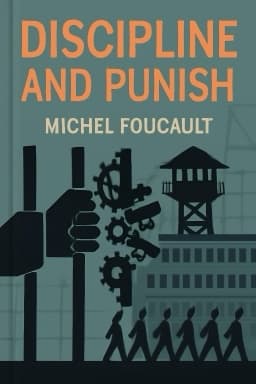
When we think of discipline, we often picture a stern teacher or a strict parent. But Michel Foucault’s Discipline and Punish shows that the real story is much bigger—and much more subtle. In the 18th and 19th centuries, new techniques of control emerged in prisons: surveillance, routines, record-keeping, and normalization. These methods soon spread to schools, hospitals, factories, and beyond, creating what Foucault calls the ‘carceral archipelago’—a network of institutions linked by the logic of discipline.
Take the school. The bell rings, and students file into rows, their movements timed and measured. Exams sort them into categories, files record every achievement and failure, and the promise of reward or threat of punishment shapes every lesson. Hospitals operate in much the same way: patients are charted, monitored, and compared to norms. Workplaces track productivity, attendance, and even emotional states. What began as a way to manage prisoners became the blueprint for modern life.
This network is not always oppressive. Discipline can empower, protect, and enable growth. But it also creates new forms of inequality and exclusion, dividing the ‘normal’ from the ‘deviant,’ the successful from the failed. The challenge is to recognize the hidden mechanisms of control, to ask who benefits, and to imagine more just and humane ways of organizing our institutions.
Foucault’s analysis remains vital in an age of standardized testing, electronic health records, and workplace surveillance. By making the invisible visible, he invites us to question the rules that govern our lives—and to fight for systems that value dignity, creativity, and true freedom.
References: Foucault, Discipline and Punish; see also Ethan Hein, Critical Theory Reddit, SparkNotes
Want to explore more insights from this book?
Read the full book summary