
The Panopticon Is Watching: Surveillance from Prisons to Smartphones
How Foucault’s Panopticon Predicted Our Digital Lives

How Foucault’s Panopticon Predicted Our Digital Lives
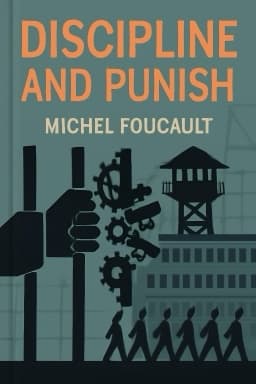
What if you never knew when you were being watched, but always had to act as if you were? This is the logic of the panopticon, Jeremy Bentham’s prison design, and the heart of Michel Foucault’s analysis in Discipline and Punish. The panopticon is a circular prison with a central watchtower. From this tower, a single guard can observe every inmate, but the inmates cannot see the guard. The result? The prisoners internalize the gaze, disciplining themselves even when the watchtower is empty.
Foucault saw the panopticon as more than a building. It was a metaphor for a new kind of power—one based on surveillance, normalization, and self-regulation. Over time, this logic spread far beyond prisons. Schools, hospitals, factories, and barracks all adopted forms of surveillance to monitor, measure, and correct behavior. The timetable, the report card, the medical chart—all are tools for making individuals visible, comparable, and manageable.
But in the 21st century, the panopticon has gone digital. Surveillance is everywhere: in the cameras that watch our streets, the software that tracks our keystrokes, and the algorithms that monitor our every move online. Social media platforms record our preferences, predict our desires, and nudge our behavior, often without our awareness. We carry the panopticon in our pockets, willingly sharing our locations, thoughts, and habits with unseen watchers.
This new era of surveillance is both empowering and unsettling. On one hand, data can be used to protect us, improve services, and create new forms of community. On the other, it raises urgent questions about privacy, autonomy, and the power of those who collect and control information. As Foucault warned, visibility can be a trap—one that shapes not just what we do, but who we are.
Yet, where there is surveillance, there is also resistance. People develop strategies to protect their privacy, subvert algorithms, and demand accountability. The challenge is to recognize the panopticon’s influence, to understand how it shapes our world, and to imagine new ways of seeing—and being seen—that honor both freedom and security.
References: Foucault, Discipline and Punish; see also Ethan Hein, Critical Theory Reddit, Partially Examined Life
Want to explore more insights from this book?
Read the full book summary