
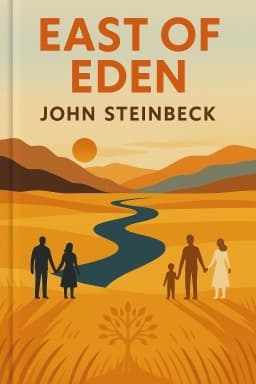
Legacy and Memory: Why ‘East of Eden’ Endures in the Modern World
Exploring the Enduring Power of Storytelling, Memory, and Hope

Exploring the Enduring Power of Storytelling, Memory, and Hope
What makes a story last? In ‘East of Eden,’ Steinbeck crafts a tale that is both deeply personal and universally resonant. The struggles of the Trask and Hamilton families are rooted in a specific time and place, yet their hopes and fears echo across generations. The novel’s power lies in its ability to connect the past and the present, to show how memory shapes identity, and how the stories we tell become the foundation for everything that follows.
Steinbeck’s narrative is a tapestry woven of memory, myth, and lived experience. The Salinas Valley is both a real place and a symbol of the cycles of life—birth and death, joy and sorrow, hope and regret. The characters’ struggles with inheritance, rivalry, and forgiveness are as relevant today as they were a century ago.
In a world that often feels fragmented and uncertain, ‘East of Eden’ offers a vision of wholeness. The novel’s insistence on the possibility of change—on the power of ‘timshel’—is a message of hope for anyone seeking meaning in the face of adversity. The legacy of the novel is not just in its characters or its setting, but in its belief that the future is always unwritten, and that we are the authors of our own stories.
For modern readers, ‘East of Eden’ is a reminder that the stories we inherit matter, and that the choices we make today will shape the world of tomorrow.
Want to explore more insights from this book?
Read the full book summary