
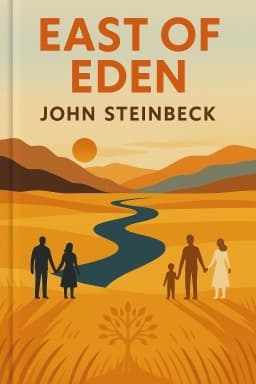
Why ‘East of Eden’ Still Haunts Us: The Ultimate Family Saga Explored
Unraveling the Timeless Drama of Family, Rivalry, and Redemption in Steinbeck’s Epic

Unraveling the Timeless Drama of Family, Rivalry, and Redemption in Steinbeck’s Epic
At the heart of John Steinbeck’s ‘East of Eden’ lies a story as old as time—the struggle between brothers, the longing for a father’s approval, and the hope that we might one day be forgiven for our failings. The Salinas Valley is more than a setting; it is a crucible in which the Trask and Hamilton families are forged, tested, and, sometimes, redeemed. The novel’s opening pages immerse us in the rhythms of the land, where the cycles of drought and abundance mirror the fortunes of its inhabitants.
Steinbeck’s depiction of sibling rivalry is both universal and deeply specific. Adam and Charles Trask’s relationship is poisoned by their father’s favoritism and their own insecurities. When Adam becomes a father to Cal and Aron, the pattern repeats, suggesting that pain, like inheritance, is passed down. Yet, the novel refuses to accept fate as destiny. Through the concept of ‘timshel’—the Hebrew word meaning ‘thou mayest’—Steinbeck offers hope. We are not doomed to repeat the sins of our fathers; we have the power to choose compassion, forgiveness, and change.
Family in ‘East of Eden’ is a source of both strength and suffering. The Hamiltons, inspired by Steinbeck’s own ancestors, bring warmth, humor, and resilience to the narrative. Their inventive spirit and unwavering moral code provide a counterpoint to the Trasks’ turmoil. Yet, even the Hamiltons are not immune to loss and regret. Through births, deaths, marriages, and betrayals, the families are shaped by forces both within and beyond their control.
The emotional climax of the novel comes in the moments of forgiveness—when a father finally sees his son, or when a brother chooses love over jealousy. These moments are rare and hard-won, but they illuminate the possibility of healing. ‘East of Eden’ endures because it tells the truth about families: they are messy, complicated, and essential. The novel’s legacy is a testament to the power of storytelling to help us understand ourselves and each other.
Whether you come to ‘East of Eden’ for its epic scope, its unforgettable characters, or its philosophical depth, you will leave changed. The Trasks and Hamiltons are not just characters in a book; they are mirrors in which we see our own families, our own struggles, and our own hopes for redemption.
Want to explore more insights from this book?
Read the full book summary