
Are You Really Free? The Surprising Psychology Behind Our Need to Submit
Why so many of us trade freedom for safety—and how to break the cycle.

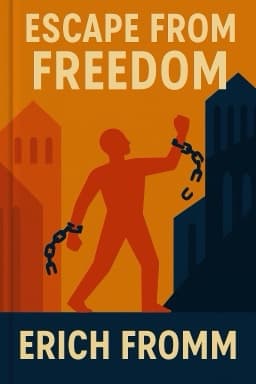
Freedom is often seen as the pinnacle of human achievement, yet paradoxically, many seek to escape it. Why do so many of us willingly surrender freedom for safety, conformity, or even destructiveness? Erich Fromm's The Fear of Freedom provides a profound psychological explanation.
Fromm identifies three primary mechanisms by which individuals escape the anxiety freedom brings: authoritarian submission, automaton conformity, and destructiveness. Authoritarian submission involves giving up one’s autonomy to a powerful leader or ideology, gaining a sense of security but losing selfhood. Automaton conformity means adopting socially prescribed roles and pseudo feelings, silencing authentic individuality. Destructiveness expresses itself as aggression and hostility, unconscious attempts to cope with feelings of powerlessness.
These psychological responses are not merely personal but deeply social and historical. The economic and social upheavals of the Reformation and capitalist modernization created conditions ripe for these escapes. The rise of totalitarian regimes like Nazism exemplifies how authoritarian submission can become a mass phenomenon, fueled by economic insecurity and psychological vulnerabilities.
Yet, Fromm offers hope. True freedom is not the mere absence of external constraints but positive freedom—the spontaneous activity of an integrated self, expressed in love, work, and creativity. This freedom requires ethical maturity and environments that nurture individuality and solidarity.
Breaking the cycle of submission and conformity demands conscious effort: cultivating self-awareness, fostering creative expression, and building communities that respect uniqueness. It is a challenging path but the only way to transform freedom from a source of fear into a source of joy and fulfillment.
Understanding why we often flee freedom is the first step toward reclaiming it. Fromm’s insights illuminate this journey, encouraging us to embrace our autonomy and build lives of authenticity and connection.
Sources: Revisesociology.com, Manuscrypts.com, Medium.com 1 2 3
Want to explore more insights from this book?
Read the full book summary