
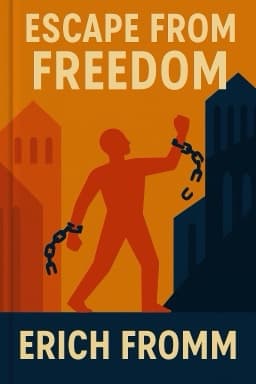
From Chains to Creativity: How to Transform the Fear of Freedom Into Joy
Learn practical ways to overcome the fear of freedom and live authentically.

Freedom can feel like a heavy burden, but it also holds the key to our deepest joy and fulfillment. Erich Fromm’s The Fear of Freedom offers a roadmap for transforming the anxiety and isolation freedom often brings into a source of creativity, love, and authentic living.
Fromm distinguishes between negative freedom—the absence of external constraints—and positive freedom, which is the spontaneous activity of the self expressed in love, work, and creativity. Positive freedom integrates individuality with connection, allowing us to live authentically and meaningfully.
However, many psychological obstacles stand in the way. Anxiety about isolation and responsibility can drive us to seek escape through authoritarian submission, conformity, or destructiveness. To overcome these, we must cultivate self-awareness, ethical maturity, and environments that support individuality.
Practical steps include fostering creative hobbies that express our unique talents, engaging in meaningful work that connects us to others, and building loving relationships that nurture our authentic selves. Education and culture play vital roles in supporting these endeavors by encouraging critical thinking, emotional honesty, and respect for diversity.
Transforming fear into joy is a lifelong journey requiring courage and commitment. Yet, it is possible and deeply rewarding. By embracing freedom positively, we reclaim our individuality and contribute to a humane and vibrant society.
This transformation is not only personal but social, calling us to create cultures and institutions that nurture genuine freedom. In doing so, we honor the true promise of freedom—not as a burden to escape but as a gift to celebrate.
Sources: Revisesociology.com, Manuscrypts.com, Medium.com 1 2 3
Want to explore more insights from this book?
Read the full book summary