
The Hidden Chains of Freedom: How Our Desire to Be Free Can Trap Us
Discover the surprising ways freedom can bind us and why many choose chains over liberty.

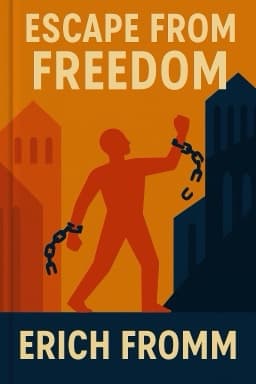
Freedom is a cherished ideal, yet for many, it feels like a burden rather than a blessing. This paradox is at the core of Erich Fromm's exploration in The Fear of Freedom. He argues that freedom, while breaking external chains, can create internal chains of anxiety, isolation, and insecurity.
Fromm explains that humans start life embedded in primary ties—family, community, religion—that provide security and orientation. These ties, however, limit personal freedom. The process of individuation involves severing these bonds to become an autonomous self, but this separation brings loneliness and existential anxiety. Freedom is thus both liberation and loss.
The historical shifts during the Reformation and the rise of capitalism intensified this tension. The dissolution of medieval social orders and the emergence of market economies disrupted traditional securities. The middle class, particularly vulnerable, experienced economic instability and social alienation. Religious reforms promised freedom from church authority but imposed new demands of submission to an all-powerful God and a compulsive work ethic, reflecting the ambivalence of freedom.
Faced with the anxiety of freedom, individuals often seek escape through authoritarian submission, automaton conformity, or destructiveness. Authoritarian submission offers security by surrendering autonomy to a powerful leader or ideology. Automaton conformity involves adopting socially approved roles and pseudo feelings, losing authentic selfhood. Destructiveness manifests as aggression born from frustration and powerlessness.
These psychological mechanisms help explain the mass appeal of totalitarian regimes, where the promise of order and belonging seduced millions into relinquishing freedom. The leader’s personality often reflects the sadistic and masochistic impulses of followers, creating a powerful psychological bond.
In contemporary democratic societies, the challenge remains. Mass culture and media can foster conformity disguised as individuality, suppressing spontaneity and authentic expression. True freedom, Fromm insists, is positive freedom—expressed through spontaneous love, creative work, and ethical living. It is a freedom that integrates individuality with connection to others.
To nurture this authentic freedom requires conscious effort—reforming education, fostering cultural environments that value uniqueness, and cultivating ethical maturity. This path transforms freedom from a source of fear into a wellspring of creativity and joy.
Understanding the hidden chains of freedom is essential for anyone seeking to live authentically in a complex world. Fromm’s insights illuminate the psychological landscapes we navigate and offer guidance toward reclaiming true liberty.
Sources: Revisesociology.com, Manuscrypts.com, Medium.com 1 2 3
Want to explore more insights from this book?
Read the full book summary