
Why Freedom Can Feel Like a Prison: The Shocking Truth Behind Our Desire to Escape
Unveiling the paradox of freedom and why it sometimes terrifies us more than it liberates.
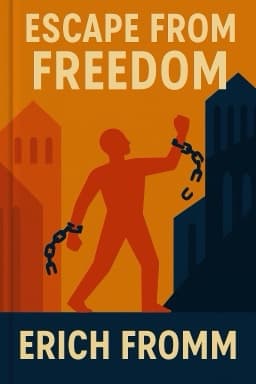
Freedom is often celebrated as the ultimate human achievement—a state where one is liberated from external constraints and free to pursue desires, dreams, and personal fulfillment. Yet, paradoxically, this very freedom can feel like a prison, an unbearable weight that many seek to escape. How can freedom, the cherished ideal, become a source of fear? This question lies at the heart of Erich Fromm's seminal work, The Fear of Freedom, where he unpacks the psychological tensions embedded in modern liberty.
Fromm begins by highlighting the paradoxical nature of freedom. While it liberates the individual from external authorities and traditional social roles, it simultaneously isolates them, casting them into an ocean of choices and responsibilities. This isolation is not merely physical but deeply psychological. The security once provided by primary ties—family, community, religion—is dissolved, leaving the individual alone with the daunting task of self-definition.
The historical emergence of the individual during the transition from medieval to modern society illustrates this tension vividly. In medieval times, people were embedded in fixed social orders, providing certainty and belonging at the cost of individuality. The Reformation and the rise of capitalism shattered these bonds, fostering individual autonomy but also anxiety and powerlessness. The middle class, especially, found itself caught in this paradox—freed from old constraints but vulnerable to economic insecurity and social alienation.
Fromm shows how this anxiety drives people to escape freedom through three primary mechanisms: authoritarian submission, automaton conformity, and destructiveness. Authoritarian submission involves surrendering autonomy to a powerful figure or ideology to regain security. Automaton conformity means losing one's authentic self by adopting socially prescribed roles and pseudo feelings. Destructiveness manifests as aggression and hostility, unconscious attempts to cope with isolation and frustration.
These mechanisms explain unsettling historical phenomena, such as the rise of totalitarian regimes like Nazism, where millions willingly gave up their freedom to escape anxiety and find belonging. The leader’s personality mirrored this psychological duality, embodying both sadistic domination and masochistic submission, resonating deeply with followers’ inner conflicts.
In modern capitalist democracy, the challenge persists. While democracy promises equality and liberty, social pressures often mask conformity as freedom. Education and media can suppress spontaneity, fostering pseudo selves that conform rather than express authentic individuality. True freedom, Fromm argues, is positive freedom—the spontaneous activity of love, work, and creativity that integrates individuality with connection to others.
Reclaiming this authentic freedom requires ethical maturity and environments that nurture individuality against the tide of conformity and alienation. It invites us to live fully, love deeply, and work productively, transforming freedom from a burden into a creative force.
Ultimately, Fromm’s insights remain deeply relevant today, urging us to understand freedom’s double-edged nature and to cultivate the courage and wisdom needed to embrace it fully.
Explore more about how freedom shapes our inner lives and societies, and discover practical paths to overcome the fear of freedom and unlock genuine autonomy and joy.
Sources: Revisesociology.com, Manuscrypts.com, Medium.com 1 2 3
Want to explore more insights from this book?
Read the full book summary