
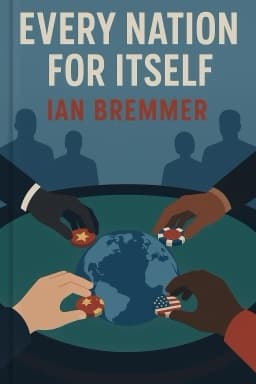
Inside the G-Zero World: How the Absence of Leadership Fuels Global Chaos and What You Can Do About It
A deep dive into the risks of a leaderless world and practical insights for policymakers and citizens

The Security Vacuum: Regional Conflicts and Cyber Threats
Without a global leader to mediate disputes and enforce norms, regional conflicts have intensified. The Middle East remains a tinderbox, with proxy wars and sectarian violence fueled by competing powers. In Asia, the South China Sea disputes and the Korean Peninsula’s volatility pose risks of escalation.
Cyber Warfare: The New Frontier of Global Conflict
Cyberattacks have surged dramatically, with millions targeting government agencies and critical infrastructure daily. These attacks blur the lines between war and peace, complicating traditional security responses.
Economic Fragmentation: Protectionism and Trade Barriers
Economic nationalism is on the rise as countries impose tariffs and quotas to protect domestic industries. This trend threatens the global supply chains that underpin modern economies, causing disruptions and uncertainty.
Adapting to the G-Zero: Strategies for States and Companies
Pivot states like Brazil and Turkey demonstrate how balancing relations among powers can preserve autonomy and influence. Companies must innovate and build resilience, with state-owned enterprises leveraging government backing and multinationals focusing on agility.
Practical Advice for Policymakers and Citizens
Policymakers should prioritize building coalitions around shared interests, invest in cybersecurity, and promote economic openness where possible. Citizens can foster resilience by staying informed, supporting innovation, and advocating for pragmatic foreign policies.
Conclusion: Embracing Complexity and Uncertainty
The G-Zero world presents daunting risks but also opportunities for those who understand its dynamics. Navigating this landscape demands adaptability, cooperation, and a willingness to innovate. By recognizing the interconnected nature of security, economic, and political challenges, we can better prepare for the uncertain future ahead.
Sources: Amazon reviews and analysis of 'Every Nation for Itself' 1 , 2 ; SAIS Review 3 ; Goodreads overview 4
Want to explore more insights from this book?
Read the full book summary