Ian Bremmer
A comprehensive analysis of the global leadership vacuum in the 21st century and its geopolitical, economic, and security implications.
The term 'G-Zero' was coined by Ian Bremmer to describe a world without global leadership.
Section 1
8 Sections
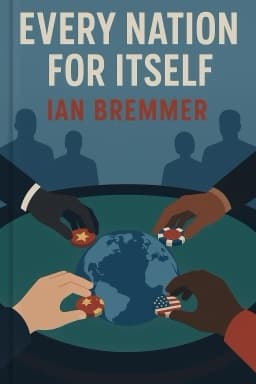
Imagine a vast poker table where each nation guards its chips closely, watching the others, waiting for a chance to play its hand. This is the essence of the G-Zero world — a global stage where no one leads, and every nation acts in its own interest.
The G-Zero is not just a concept but a reality born from the shifting balance of power. The United States, once the unquestioned leader, faces internal challenges — soaring debt, political polarization, and a public increasingly focused on domestic concerns. Meanwhile, emerging powers like China and India are preoccupied with their own development and not yet ready to shoulder global responsibilities.
This absence of leadership affects everything from climate change to economic stability and security. In this new world, cooperation becomes difficult, and crises are harder to manage. Yet, this is not a tale of decline alone; it is a moment of transition, fraught with risk but also with the possibility of new forms of leadership emerging. As we explore further, we will see how this vacuum shapes global politics and what it means for nations and individuals alike.
Let us now turn to the historical journey that led us here, tracing the rise and fall of global leadership and the forces that carved the path to the G-Zero.
What does the term 'G-Zero' signify?
15 more quizzes available in app
Understanding the absence of global leadership in today's world.
7 more insights available in app
Unlock all 8 sections, 8 insights, full audio, and interactive mind map in the SnapBooks app.
Unpacking the leaderless world order and what it means for global stability and your future
Read articleA deep dive into the risks of a leaderless world and practical insights for policymakers and citizens
Read article