
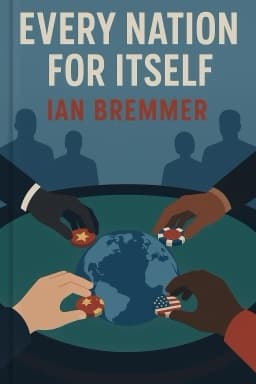
Why the G-Zero World Means Every Nation Is Out for Itself — And Why That Matters to You
Unpacking the leaderless world order and what it means for global stability and your future

Understanding the G-Zero: A World Without a Leader
Imagine a vast global stage where no one actor commands the spotlight. This is the essence of the G-Zero world—a term coined to describe the current state of international affairs where no single country or alliance holds enough power to lead collectively. Gone are the days when the United States or a coalition like the G7 could set the agenda for global cooperation. Instead, nations act largely in their own interests, leading to fragmented policies and increased uncertainty.
This shift has profound implications. Consider the 2009 Copenhagen climate summit — a moment when the world desperately needed unity to tackle climate change. Instead, mistrust and competing priorities led to a collapse in negotiations.
The Historical Journey to G-Zero
The post-World War II order was built on American economic might and diplomatic vision. Programs like the Marshall Plan poured billions into rebuilding Europe, while institutions like Bretton Woods stabilized currencies and trade. But this order began to unravel with the 1973 oil embargo and the Nixon Shock of 1971, which ended dollar-gold convertibility, ushering in economic volatility.
Meanwhile, emerging economies in Asia began to rise, setting the stage for new power dynamics. These historical shifts created a complex mosaic where old alliances frayed and new players emerged, but no clear leadership filled the void.
The Real-World Impact: Conflict, Cyberwarfare, and Economic Fragmentation
The G-Zero world is not just theoretical. It manifests in escalating regional conflicts, like those in the Middle East and Asia, where rivalries simmer without a global referee. Cyber warfare has become a new battleground, with millions of attacks daily targeting critical infrastructure, highlighting vulnerabilities in global security.
Economic protectionism rises as countries erect tariffs and barriers, fragmenting trade and disrupting supply chains. This inward focus threatens the stability of the global economy and the interconnectedness that modern prosperity depends on.
Who Thrives and Who Struggles in G-Zero?
Some countries, dubbed 'pivot states,' skillfully balance relations among major powers to maintain influence. Brazil, Turkey, and Indonesia exemplify this nimbleness. Conversely, more exposed nations reliant on a single ally face vulnerabilities. Corporations also adapt differently—state-backed enterprises often enjoy advantages, while multinationals must innovate to survive.
America’s Role and Europe’s Challenges
America remains a powerhouse but is constrained by rising debt and shifting public opinion favoring isolationism. Europe grapples with internal divisions, economic strains, and migration challenges that weaken its global leadership potential.
The Rise of Emerging Powers: Ambitions Tempered by Realities
Emerging giants like China and India face internal development priorities that temper their global ambitions. The BRICS group’s diversity limits cohesive action, contributing to the continuation of the G-Zero world.
Conclusion: Navigating Uncertainty with Adaptability
The G-Zero world is a landscape of uncertainty but also opportunity. Success depends on adaptability, strategic partnerships, and pragmatic leadership. As global power diffuses, understanding these dynamics is essential for anyone interested in the future of international relations and global stability.
Sources: Amazon reviews and analysis of 'Every Nation for Itself' 1 , 2 ; SAIS Review 3 ; Goodreads overview 4
Want to explore more insights from this book?
Read the full book summary