
The Science Behind 'Exactly What to Say': Why These Phrases Work So Well
Explore the neuroscience and psychology that make Phil M. Jones’s phrases irresistible and effective.

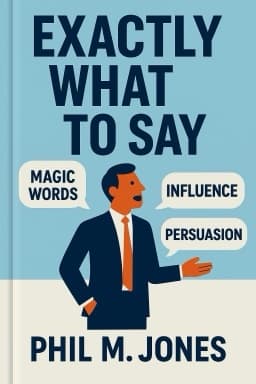
Understanding why certain words influence us requires a look into how our brains process information. Phil M. Jones’s book Exactly What to Say leverages behavioral science to craft phrases that speak directly to the subconscious mind.
Our subconscious brain operates on a binary system: it decides yes or no quickly, often before our conscious mind has fully processed information. Phrases like 'I'm not sure if it's for you, but...' reduce pressure and invite curiosity, making the subconscious more likely to say yes.
Framing questions such as 'How open-minded are you?' appeal to positive self-identity, a powerful motivator in behavioral psychology. People want to see themselves as open and reasonable, so they respond accordingly.
Loss aversion, a concept from behavioral economics, explains why highlighting what could be lost often motivates more than emphasizing gains. Questions like 'How would you feel if you missed out?' tap into this primal fear, driving action.
Visualization techniques, such as 'Just imagine...', engage the brain’s image-processing centers, creating mental rehearsals that make future success feel real and achievable.
Timing questions like 'When would be a good time to...?' assume positive future action, reducing resistance and scheduling commitment, a tactic supported by studies on decision-making and procrastination.
Finally, responding to objections with 'What makes you say that?' shifts control back by inviting explanation, avoiding confrontational debate and fostering understanding.
By combining communication skills with neuroscience, you gain a powerful edge in any interaction. This knowledge transforms influence from guesswork to science-backed strategy.
Sources include psychological research, behavioral economics studies, and expert reviews of Phil M. Jones’s work, confirming the robust scientific foundation behind these magic words. 1 3 4
Want to explore more insights from this book?
Read the full book summary