
Article from Book Summary
10 Surprising Lessons from 'Four Hundred Souls' That Every American Should Know
Uncover the overlooked, the erased, and the inspiring truths from 400 years of Black American experience.

Book Beacon
May 19, 2025522 views
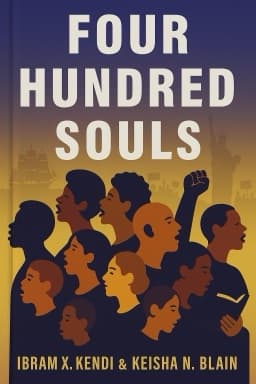
Four Hundred Souls: A Community History of African America, 1619–2019Ibram X. Kendi & Keisha N. Blain (Editors)
Uncover the overlooked, the erased, and the inspiring truths from 400 years of Black American experience
Most of us grew up with a version of American history that left out crucial voices and stories. Four Hundred Souls sets the record straight, offering readers a treasure trove of lessons that upend what we thought we knew. Here are ten insights from the book that will surprise—and inspire—you:
- The White Lion, not the Mayflower, brought the first Africans to English America. This ship’s arrival in 1619 is a foundational moment, yet it’s often omitted from textbooks.
- The first interracial law punished white men, not Black women. Early colonial laws were obsessed with maintaining the 'purity' of whiteness, shaping racial boundaries that endure today.
- Black women were taxed as laborers, unlike white or Indigenous women. This unique burden reveals how Black femininity was devalued and exploited from the start.
- Some Africans owned land and even employed servants in early Virginia. Before laws hardened, race relations were more complex than many realize.
- Maroon communities of escaped slaves thrived for generations. These hidden villages preserved African traditions and mounted armed resistance against recapture.
- Spirituals were more than songs—they were coded messages for escape and survival.
- During Reconstruction, hundreds of Black Americans held public office. This era of Black political power was met with a violent backlash that shaped the next century.
- Black women were central to the Harlem Renaissance and the Civil Rights Movement. Their contributions in art, activism, and leadership were foundational.
- Modern movements are intersectional and digital. Today’s activists use social media and embrace interconnected struggles, from gender to immigration, to build broader coalitions.
- Memory and storytelling are acts of resistance. Oral tradition, quilts, and poetry have preserved Black history even when written records were denied.
These lessons remind us that American history is richer, more complex, and more inspiring than we’ve been taught. Four Hundred Souls is essential reading for anyone who wants to understand not just the Black experience, but the American experience. 1 2 4
Want to explore more insights from this book?
Read the full book summary