
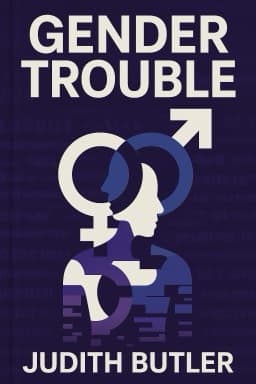
The Radical Power of Gender Trouble: Lessons from ‘The Straight Mind’
How Subverting Norms Opens New Paths for Identity and Politics

How Subverting Norms Opens New Paths for Identity and Politics
Monique Wittig’s The Straight Mind is a foundational text that challenges the rigid frameworks of gender and sexuality imposed by society. By revealing the constructed nature of the heterosexual matrix and the performativity of gender, Wittig opens a space for radical political and cultural transformation.
Wittig’s analysis shows that gender is not a stable identity but a series of repeated acts that produce the illusion of coherence. This performance is regulated by compulsory heterosexuality, which enforces binary gender norms and marginalizes queer identities. However, acts of gender trouble—such as drag or queer kinship formations—disrupt these norms and expose their artificiality.
The political implications are profound. Wittig argues that agency emerges within power structures through acts of interruption and subversion. Political identities are inevitably 'impure,' entangled with power relations, yet this impurity enables coalitional possibilities and nuanced activism that can navigate contradictions rather than deny them.
By embracing the multiplicity and fluidity of gender, Wittig’s work challenges essentialist feminist narratives and calls for a politics that recognizes difference without erasing solidarity. This approach fosters inclusive movements that reflect the complex realities of gendered lives.
Ultimately, The Straight Mind teaches us that gender trouble is not just disruption but a creative force. It invites us to imagine and enact new ways of being and relating that transcend normative constraints.
For activists, scholars, and anyone interested in the future of identity politics, Wittig’s essays remain a vital guide and inspiration.
Sources: Arts Faculty HKU, DePauw University, Wikipedia, Trivia Voices 1 2 3 4
Want to explore more insights from this book?
Read the full book summary