
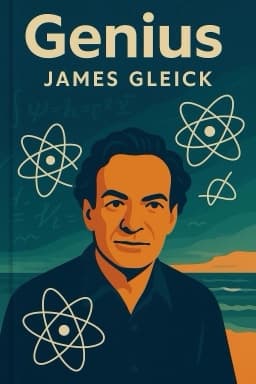
Unlocking the Genius Mind: How Richard Feynman’s Curiosity Changed Physics Forever
Discover the extraordinary journey of a curious boy who became a revolutionary physicist and beloved educator.

Imagine a young boy wiring his bedroom with radios, switches, and lights, transforming his space into a personal laboratory of discovery. This was the early world of Richard Feynman, whose childhood curiosity ignited a lifelong passion for understanding the invisible forces that govern our universe. His early experiments were not just playful acts but foundational experiences that nurtured his scientific intuition and creativity.
As he progressed through school, Feynman encountered the tension many gifted children face—the challenge of balancing intellectual passion with social expectations. He excelled in mathematics competitions, where his rapid problem-solving skills shone, yet struggled with subjects like English, fearing judgment. This period taught him resilience and the importance of carving out a unique intellectual identity.
College marked a pivotal shift, as he moved from abstract mathematics to the practical and profound challenges of physics. Immersed in the emerging world of quantum mechanics, he embraced the paradoxes and uncertainties that confounded many.
During World War II, Feynman’s talents were harnessed in the Manhattan Project, where he pioneered innovative computing methods combining mechanical calculators and human operators. The intense secrecy and ethical dilemmas of this period left a deep impression, highlighting the complex responsibilities scientists bear. Despite the gravity, moments of humor and camaraderie illuminated the human side of this monumental endeavor.
Perhaps most transformative was Feynman’s approach to teaching. His Physics X course and the famed Feynman Lectures on Physics revolutionized science education by emphasizing conceptual understanding and active engagement over rote memorization. His animated storytelling and playful analogies made complex topics accessible and inspiring, extending his influence far beyond his own research.
Beyond science, Feynman was a charismatic personality known for his humor, bongo playing, and captivating stories. His autobiographical works humanized the scientist, breaking stereotypes and inviting a broader audience to share in the joy of discovery. His philosophy embraced uncertainty and pragmatism, urging us to accept the limits of understanding while relentlessly pursuing knowledge.
Feynman’s legacy continues to inspire innovation across disciplines, from nanotechnology to education reform. His willingness to explore unconventional ideas, embrace failure, and maintain joy in learning offers timeless lessons for all seekers of knowledge. Ultimately, his life exemplifies that genius is as much about curiosity and courage as about intellect.
As we reflect on Feynman’s journey, we see a beacon for anyone daring to follow their curiosity, challenge norms, and find joy in the mysteries of the universe.
Want to explore more insights from this book?
Read the full book summary