
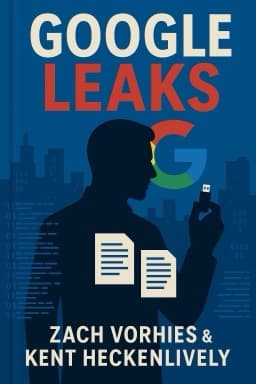
Digital Censorship Exposed: How Big Tech Shapes What You See
The Secret Algorithms and Blacklists Behind Your Search Results

The Secret Algorithms and Blacklists Behind Your Search Results
Every time you type a question into Google, you trust that the results are fair, comprehensive, and unbiased. But what if the answers you see have been quietly filtered, not by relevance, but by invisible hands deciding what you should—and shouldn’t—know? This blog uncovers the hidden world of digital censorship, drawing on whistleblower accounts and leaked documents to reveal how tech giants like Google shape reality for billions of users every day.
At the heart of this machinery are digital blacklists—lists of forbidden words, phrases, and websites that can be instantly suppressed from search results. These aren’t just used to block hate speech or dangerous content; they’ve been deployed to erase alternative viewpoints in science, suppress political dissent, and control narratives during breaking news. For example, entire websites dedicated to controversial scientific research, such as cold fusion, have been delisted, and viral moments like the “Covfefe” tweet have had their interpretations manually rewritten by internal teams.
More insidious is the rise of machine learning fairness systems. These algorithms are designed to “correct” perceived social biases by prioritizing certain narratives, even when the suppressed information is factually accurate. While the intention may be noble, the outcome is a new form of bias—one that is harder to detect and nearly impossible to challenge.
Why does this matter? Because the power to curate information is the power to shape culture, politics, and even scientific progress. When only approved narratives are allowed, debate withers, innovation slows, and the public loses trust. The consequences ripple far beyond the digital world, affecting elections, public health, and the very nature of free inquiry.
But there is hope. As more whistleblowers come forward and public awareness grows, new movements for digital transparency are taking root. Open-source platforms, legal reforms, and media literacy campaigns offer a path toward a more open and accountable information ecosystem. The future of truth is still unwritten—and it’s up to all of us to demand transparency and fairness from those who control the digital gates.
SEO Keywords: digital censorship, algorithmic bias, search suppression, Google blacklists, information control.
Want to explore more insights from this book?
Read the full book summary