
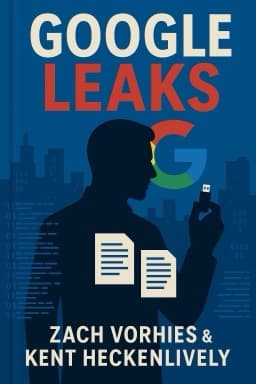
Inside Google: The Whistleblower Who Changed Everything
A Deep Dive into the Courage, Consequences, and Culture Wars Inside the World’s Most Powerful Tech Company

A Deep Dive into the Courage, Consequences, and Culture Wars Inside the World’s Most Powerful Tech Company
What happens when the world’s most beloved search engine becomes the gatekeeper of truth? This question haunted one Google engineer as he watched the company he’d admired for years transform from a quirky, idealistic startup into a digital empire with the power to shape reality itself. In this blog, we journey through the heart of Google’s internal culture, uncovering how a devotion to openness and meritocracy slowly gave way to secrecy, ideological conformity, and algorithmic control.
From the early days, Google was a magnet for dreamers and rebels. The company’s original motto, “Don’t Be Evil,” wasn’t just a slogan—it was the soul of the organization. Weekly TGIF meetings were legendary for their transparency, where anyone could challenge the founders or ask the toughest questions. But as Google’s influence grew, so did the stakes. The 2016 US election marked a seismic shift. Suddenly, the company’s leadership saw themselves as guardians against misinformation, determined to protect users from what they perceived as digital threats. The result? A new era of internal policies, secret blacklists, and AI-driven content suppression.
The whistleblower at the center of this story spent eight years at Google, working on high-impact projects and earning the trust of his peers. But when he discovered the depth of algorithmic manipulation—how certain topics, from political events to alternative scientific research, were being quietly erased from public view—he faced an agonizing choice. Stay silent and protect his career, or risk everything to bring the truth to light? His decision to speak out would spark a global conversation about the unchecked power of Big Tech.
This exposé doesn’t just reveal the tools of censorship—like blacklists, manual overrides, and machine learning fairness systems—it also asks the deeper question: Who decides what is true? Through real-world examples, from the infamous “Covfefe” tweet incident to the suppression of controversial scientific topics, we see how a handful of insiders can shape the boundaries of public knowledge.
But the story doesn’t end with risk and loss. The whistleblower’s courage inspired a new wave of digital activism, whistleblower support networks, and a global push for transparency. Today, the fight for open information is more urgent than ever, and the lessons from inside Google remind us that the future of truth depends on the vigilance and bravery of ordinary people.
Read on to discover the hidden world inside Google and what it means for the future of information freedom.
SEO Keywords: Google whistleblower, big tech censorship, information suppression, digital transparency, tech ethics.
Want to explore more insights from this book?
Read the full book summary