
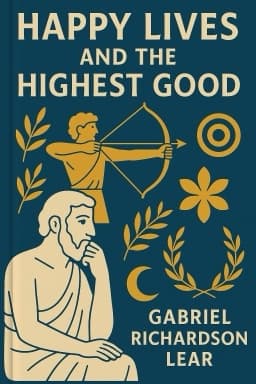
Unlocking Aristotle’s Secret to True Happiness: Why Most People Miss the Mark
Discover Aristotle’s timeless blueprint for a flourishing life and why understanding the 'highest good' can transform your worldview.

Introduction: The Quest for the Highest Good
Imagine a life where every action, every choice, is directed toward an ultimate goal—a good so final that it alone makes life worth living. This is the essence of Aristotle's ethical inquiry. Unlike modern notions that equate happiness with momentary pleasures or external success, Aristotle’s concept of eudaimonia transcends mere feelings and possessions. It is the ultimate end, chosen for its own sake, encompassing completeness and self-sufficiency.
All Actions Aim at Some Good
Aristotle begins by observing that every craft, inquiry, and action aims at some good. This universal teleology implies that human life is purposeful. But what is this good? It cannot be relative or fragmented, for that would render life aimless. Instead, it must be a single, most final good that grounds all other aims.
This highest good is what Aristotle calls eudaimonia, often translated as happiness or flourishing. Importantly, it is not a transient state but the full realization of human potential.
The Finality Criterion: No Infinite Regress
One of Aristotle’s key contributions is the finality criterion: the highest good is chosen for itself alone, not for the sake of anything else. Without this, desires would become an endless chain, making purposeful action impossible. This insight clarifies why happiness must be a final end, giving coherence to our lives.
Self-Sufficiency and Completeness
Aristotle further explains that happiness is self-sufficient—it makes life lacking in nothing essential. This does not mean having all goods but having enough to make life desirable and whole. A life rich in contemplation and virtue can be self-sufficient even without wealth or honor.
Moral Virtue: The Beauty of Excellence
Virtues like courage and temperance are fine actions chosen for their intrinsic excellence. They harmonize reason and desire, producing pleasure that reflects alignment with the highest good. Virtue is not just about doing right but doing beautifully.
Practical and Theoretical Wisdom
Practical wisdom helps us deliberate well about virtuous action, while theoretical wisdom is the highest form of rational activity focused on eternal truths and contemplation. The contemplative life is the most perfect happiness, with moral virtue supporting and approximating it.
The Two Happy Lives
Aristotle distinguishes between the political life of moral virtue and the philosophical life of contemplation. While both are valuable, the contemplative life is supreme, the most final and self-sufficient activity.
Conclusion: A Unified Vision of Happiness
Ultimately, Aristotle presents happiness as a monistic good centered on contemplation, enriched by moral virtue. This unified pursuit offers profound guidance for living a life that is not fragmented but whole, not aimless but purposeful.
By embracing these timeless insights, we can transform our understanding of what it means to live well and pursue true happiness.
Want to explore more insights from this book?
Read the full book summary