
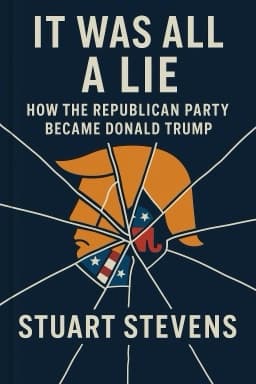
Inside the GOP’s Dark Transformation: What Stuart Stevens Reveals About the Republican Party’s Hidden Truths
A Deep Dive into How Race, Fear, and Deception Reshaped America’s GOP

In recent decades, the Republican Party has undergone a profound transformation that has reshaped the American political landscape. Stuart Stevens, a longtime Republican strategist, offers a candid and deeply personal account of this evolution in his book. What emerges is a portrait of a party that has traded broad coalition-building for racial grievance, cultural warfare, and political deception.
One of the most striking revelations is the central role race has played in this transformation. The so-called Southern Strategy, which began in the 1960s, was not merely a political tactic but a deliberate appeal to white voters’ racial anxieties. This shift caused a dramatic reorientation of the party’s base, alienating African American voters and cementing a new identity grounded in white grievance. Stevens illustrates how campaigns used coded language and even promoted independent black candidates to split votes, ensuring electoral victories through racial division rather than inclusive policy.
Equally revealing is the weaponization of “family values.” Ostensibly a moral platform, it served primarily as a cultural code to exclude and marginalize opponents. Stevens highlights the paradox of evangelical voters who supported leaders whose personal conduct often violated the very values they championed, reconciling this contradiction through an emphasis on authenticity and political alignment rather than moral consistency.
Stevens also exposes the party’s long-standing fiscal hypocrisy and political deception. Despite repeated promises to reduce the national debt, Republican administrations have overseen significant increases in borrowing, while selectively supporting corporate subsidies. Political advertising, rife with misleading statistics and emotional manipulation, perpetuates a culture of misinformation designed to win at all costs.
The intellectual foundations of conservatism have eroded under the weight of populism and conspiracy theories, with media ecosystems like talk radio and Fox News amplifying tribalism and undermining critical discourse. This has fostered an environment where loyalty to a tribe eclipses commitment to ideas or truth.
Underlying these developments is a potent mix of fear and cowardice. Party elites, afraid of losing primary challenges or alienating powerful interest groups, have often supported divisive leadership despite misgivings. This dynamic has enabled the normalization of authoritarian rhetoric and the erosion of democratic norms.
Looking ahead, Stevens warns that demographic shifts — the declining share of white voters and the growing diversity of the electorate — threaten the party’s national viability unless it embraces serious reform. The future of the GOP hangs in the balance between continued tribalism and the possibility of renewal through honesty and accountability.
This analysis not only draws from Stevens’ insider perspective but is supported by critical reviews and broader political commentary. The transformation of the Republican Party is a cautionary tale about the dangers of racial resentment, cultural division, and political expediency overriding democratic principles. It challenges all Americans to consider the costs of such a path and the urgent need for renewal.
For those seeking to understand the forces shaping modern American politics, Stevens’ book is an essential, if uncomfortable, guide. It reveals the shadows behind the headlines and invites reflection on the power of truth to heal and transform.
Sources: National Review, Amazon, Mother Jones, Foreign Affairs
Want to explore more insights from this book?
Read the full book summary