
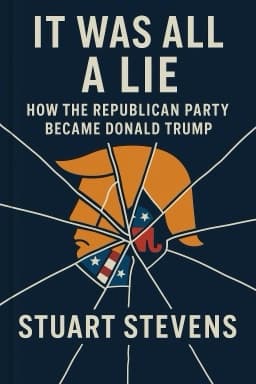
The Republican Party’s Race Problem: How Racial Politics Shaped Modern Conservatism
Unpacking the Racial Foundations and Consequences of GOP Strategy

Race is often described as the third rail of American politics — a topic so charged that many avoid it altogether. Yet, to understand the Republican Party’s transformation, one must confront how deeply race has influenced its trajectory. Stuart Stevens, with decades of experience inside the party, pulls back the curtain on this uncomfortable truth.
The Southern Strategy, emerging after the 1964 Civil Rights Act, was a pivotal moment. It marked a deliberate shift to attract white southern voters by appealing to their opposition to integration and civil rights reforms — often through coded language like 'states’ rights' and 'law and order.' This approach was not just a political tactic but a foundational redefinition of the party’s identity.
Before this shift, Republicans had significant African American support, with candidates winning up to 40% of the black vote. However, opposition to civil rights legislation caused a dramatic decline, with black voter support dropping to historic lows. This realignment entrenched a racial divide that persists today.
Stevens recounts examples where campaigns actively promoted independent black candidates not to empower minority voices but to split the Democratic vote, illustrating the cynical use of race as an electoral tool. These tactics contributed to a political landscape where racial grievance became a central pillar of GOP strategy.
Understanding this racial foundation is crucial because it explains much of the party’s policy choices, rhetoric, and coalition-building efforts. It also highlights the challenges the GOP faces as America becomes more diverse. Without addressing this legacy, the party risks further marginalization and division.
This examination is supported by extensive research and critical commentary, underscoring the persistent influence of race in shaping political behavior and party identity. It challenges readers to grapple with the realities behind political slogans and to consider the long-term consequences for American democracy.
For those interested in the intersection of race and politics, Stevens’ insights provide a sobering but necessary perspective on the forces that continue to define conservatism in the United States.
Sources: National Review, Mother Jones, Foreign Affairs
Want to explore more insights from this book?
Read the full book summary