
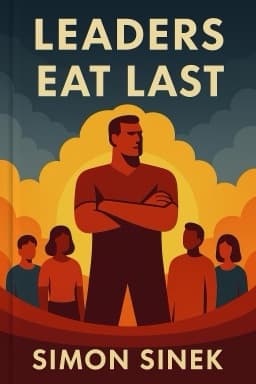
Why Simon Sinek’s ‘Leaders Eat Last’ Will Change How You Lead Forever
Discover the transformative leadership lessons that turn workplaces into communities of trust and cooperation.

In a world where leadership is often equated with authority and results, Simon Sinek’s book Leaders Eat Last challenges us to rethink what it truly means to lead. At its heart, the book reveals that the best leaders are those who prioritize the well-being and safety of their people, creating a Circle of Safety that fosters trust, cooperation, and resilience.
This powerful metaphor opens Sinek’s message: leadership is about empathy and sacrifice. Leaders who put others first inspire loyalty and unleash the full potential of their teams. The book draws on biology, psychology, and real-life stories to explain how four key chemicals — endorphins, dopamine, serotonin, and oxytocin — govern our motivation and social bonds. Understanding these chemicals helps leaders create environments where people feel safe to innovate and collaborate.
One of the most compelling ideas is the Circle of Safety, a concept rooted in evolutionary biology. When people feel secure within their group, they focus on external challenges rather than internal threats. This safety enables cooperation and creativity, transforming workplaces from hostile environments into supportive communities.
However, Sinek also warns of the dangers of chronic stress and a dopamine-driven culture obsessed with instant gratification. Toxic workplaces elevate cortisol, the stress hormone, which damages health and erodes trust. Meanwhile, technology can fragment attention and weaken meaningful connections, making leadership more challenging than ever.
Yet, the book offers hope through integrity and friendship. Leaders who admit mistakes and build genuine relationships foster deeper trust and stronger teams. They understand that leading people, not numbers, is the key to sustainable success.
In sum, Leaders Eat Last is a call to courageous, empathetic leadership that serves others and builds lasting cultures of trust. It is a must-read for anyone looking to inspire and empower those around them.
For further insights and reviews, see sources from Heleo, LinkedIn, and Medium that explore these themes in depth. 1 2 3
Want to explore more insights from this book?
Read the full book summary