
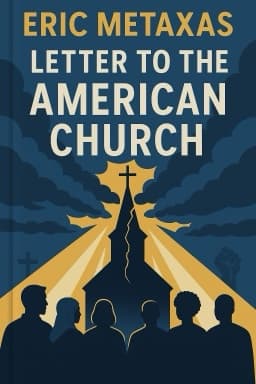
Why the Modern Church is Failing—and How to Reclaim Its True Power
Discover the hidden truths behind the Church’s silent retreat and the urgent call to courageous faith.

The Church today faces a crisis of identity and purpose. No longer the vibrant, prophetic force shaping nations and cultures, it has retreated into a private sphere, silenced by fear, legal restrictions, and a misunderstanding of grace. Dietrich Bonhoeffer’s prophetic voice echoes through history, warning that cheap grace and silence in the face of evil are deadly errors that paralyze the Church’s witness.
Historically, the German Church’s failure to confront Nazism exemplifies the tragic consequences of silence and complicity. The Spiral of Silence, a social phenomenon where fear suppresses truth-telling, allowed evil to flourish unchecked. Bonhoeffer’s courageous stand and ultimate sacrifice remind us that faith demands costly obedience and bold action.
Modern churches often idolize evangelism narrowly, avoiding political engagement due to misinterpretations of scripture and legal fears like the Johnson Amendment. Yet true religious liberty protects the public exercise of faith, calling believers to be the conscience of the state, advocating for justice and truth.
Examples from history—such as William Wilberforce’s abolitionist fight and Ronald Reagan’s opposition to Communism—show how faith-driven leadership can transform society. The blog urges believers to embrace a religionless Christianity that lives authentically beyond rituals, engaging culture without assimilation.
Ultimately, revival depends on God’s sovereign grace, invited by faithful prayer and courageous obedience. The Church’s future hinges on collective commitment to costly discipleship, speaking truth in love, and active societal engagement. This is a call to rise, repent, and reclaim the Church’s transformative power in the world.
Are you ready to join this movement of courageous faith? The journey begins with understanding the Church’s true identity and embracing the cost of discipleship.
Sources: The Cost of Discipleship by Dietrich Bonhoeffer, historical analyses of the German Church during Nazism, reflections on religious liberty and political engagement in America. 1 3 4
Want to explore more insights from this book?
Read the full book summary