
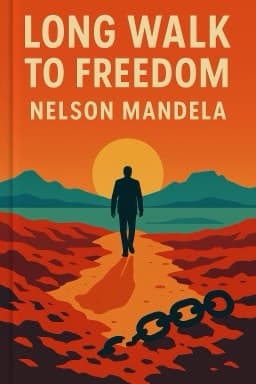
The Untold Secrets Behind Nelson Mandela’s Long Walk to Freedom: What You Didn’t Know
Discover the hidden layers of Mandela’s journey from a rural village to global icon, and how his story can inspire your own path.

Few autobiographies have captured the world’s imagination like Nelson Mandela’s Long Walk to Freedom. Beyond the broad strokes of his political career, this remarkable narrative reveals the intimate details of a young boy named Rolihlahla, born in a small Thembu village, whose name means 'pulling the branch of a tree'—a fitting metaphor for a man destined to challenge the status quo. Mandela’s early life was deeply intertwined with the traditions and values of the Xhosa people, a cultural foundation that instilled in him a profound sense of community and responsibility.
Mandela’s journey from this pastoral setting to the mission schools introduced him to a new world of English language and Western customs, a duality that shaped his identity and broadened his horizons. The tension between these worlds was a constant undercurrent, reflecting the colonial reality that many Africans faced. His experiences at Clarkebury and Healdtown schools, including learning ballroom dancing and Western etiquette, were not mere curiosities but essential elements in developing the social skills that would later serve him in political negotiations.
Political consciousness blossomed during his university years at Fort Hare, where Mandela encountered diverse ideas and began questioning the injustices of apartheid. His involvement in founding the ANC Youth League marked a shift from personal awakening to collective activism. The Alexandra bus boycott and other grassroots campaigns provided practical lessons in mobilizing communities and standing up to oppression.
Perhaps most compelling is Mandela’s time spent imprisoned on Robben Island for 27 years. Far from breaking his spirit, the harsh conditions forged an unshakable resilience and a philosophy centered on forgiveness rather than revenge. The prison became a microcosm of the larger struggle, where Mandela emerged as a leader, educator, and symbol of hope for millions.
Upon his release, Mandela faced the daunting task of negotiating the end of apartheid. His leadership during this period was characterized by patience, humility, and a steadfast commitment to reconciliation. The Truth and Reconciliation Commission embodied his vision of healing a divided nation through dialogue and forgiveness, rather than retribution.
Mandela’s presidency was a testament to inclusive leadership, emphasizing unity and shared destiny. His metaphor of a shepherd guiding from behind illustrates a leadership style rooted in empathy and service. The legacy he left continues to inspire movements for justice worldwide, reminding us all that the greatest glory lies in rising every time we fall.
This blog draws on rich biographical studies and critical analyses to offer a comprehensive understanding of Mandela’s life and lessons. Whether you seek inspiration, historical insight, or leadership wisdom, Mandela’s story is a beacon illuminating the path toward freedom and dignity for all.
Sources: Theaoi.com review on Mandela’s biography, LitCharts study guide on Long Walk to Freedom, Amazon insights on Mandela’s character and leadership 1 2 3
Want to explore more insights from this book?
Read the full book summary