
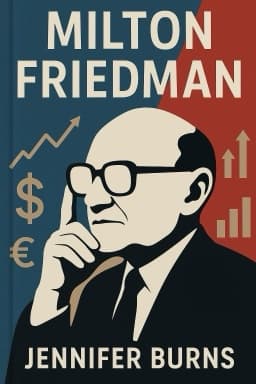
Milton Friedman’s Political Odyssey: From Scholar to Conservative Icon
How an economist became the face of modern conservatism and reshaped political discourse worldwide.

Milton Friedman’s impact transcended academia, making him a household name and a defining figure of modern conservatism. Through charismatic television appearances and bestselling books, he brought economic ideas into the public spotlight, demystifying complex concepts for millions.
His advisory roles to political leaders like Barry Goldwater and Ronald Reagan translated theory into policy. Reaganomics, with its emphasis on tax cuts, deregulation, and monetary discipline, bore the unmistakable imprint of Friedman’s thought. His assertion that inflation is 'always and everywhere a monetary phenomenon' became a guiding principle for policymakers.
Friedman’s role as a public intellectual symbolized the rise of neoliberalism, a movement advocating free markets and limited government intervention. Yet, this legacy is not without controversy. Critics point to social inequalities and economic disruptions linked to these policies, sparking ongoing debates about their costs and benefits.
This blog examines Friedman’s political journey, his media presence, and the enduring influence of his ideas on global economic and political landscapes.
Sources: Cato Institute, The New York Times, CFA Institute Blog 3 2 1
Want to explore more insights from this book?
Read the full book summary