
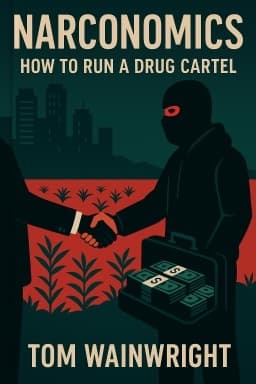
Inside the Shadow Economy: How Drug Cartels Run Like Fortune 500 Companies
Unveiling the Business Secrets Behind the Deadly Drug Trade

Drug cartels are often seen as chaotic gangs driven by violence and greed, but beneath this brutal exterior lies a complex, well-oiled business machine. The book 'Narconomics' peels back the layers of myth to reveal how these organizations function with remarkable efficiency and strategic planning, much like Fortune 500 companies.
At the heart of the drug trade is a sophisticated supply chain. From the Andean coca fields where farmers harvest leaves for mere cents, to the bustling streets of American cities where cocaine sells for hundreds of dollars per gram, the price markup can exceed 30,000%. This massive value addition is controlled by cartels who act as monopsonies, dictating prices to impoverished farmers while absorbing increased costs themselves to keep retail prices stable. This explains why aggressive eradication efforts often fail to raise drug prices or reduce supply significantly.
Competition among cartels is fierce, especially over scarce resources like border crossings. In cities such as Ciudad Juárez, violent turf wars erupt as cartels fight to control these lucrative choke points. However, in some regions, rival gangs have chosen cooperation over conflict, dividing territories to maximize profits and reduce violence. This collusion mirrors legitimate market behaviors and underscores the economic incentives driving cartel decisions.
Managing people is another critical challenge. Prisons, paradoxically, serve as universities for criminals, where alliances are forged and skills honed. Cartels employ formal governance structures, including constitutions, to maintain discipline and loyalty within their ranks. Recruitment relies heavily on ethnic and cultural ties, leveraging social pressures to enforce contracts in an environment where legal enforcement is impossible.
Public relations also play a surprising role. Cartels use banners called narcomantas to communicate with the public and rivals, and they often provide social services in neglected communities to build legitimacy and loyalty. This dual role as enforcers and benefactors complicates law enforcement efforts and requires nuanced strategies.
The digital revolution has transformed drug markets. Online marketplaces on the Dark Web use reputation systems to enforce trust, reducing the need for violent enforcement. Cryptocurrencies facilitate anonymous transactions, expanding reach and complicating policing. Despite the illegal nature, most disputes in these markets are resolved nonviolently, highlighting the businesslike nature of the trade.
Facing pressure from legalization movements, cartels are diversifying into synthetic drugs like methamphetamine and fentanyl, as well as people smuggling. These new ventures offer higher margins and different operational challenges, illustrating the adaptability of these organizations.
Traditional supply-side enforcement has proven costly and largely ineffective. Billions spent on crop eradication and arrests have not significantly reduced drug availability. Demand-side approaches focusing on treatment, education, and rehabilitation show more promise in sustainably reducing drug problems.
Ultimately, viewing cartels through an economic lens enables smarter, more humane policies that balance enforcement with public health. International cooperation, legal reforms, and data-driven strategies can help weaken these criminal enterprises and build safer communities.
By learning the cartels’ own tricks and applying them in self-defense, societies can reclaim control and envision a future where the shadow economy no longer dictates the lives of millions.
Sources: Amazon reviews, Small Wars Journal, Blinkist summary, Sobrief.com analysis 1 2 3 4
Want to explore more insights from this book?
Read the full book summary