
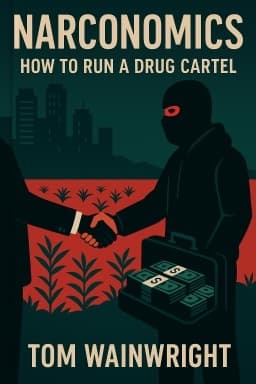
Why The War on Drugs is Failing: Economic Insights That Could Change Everything
Rethinking Drug Enforcement Through the Lens of Economics

The war on drugs has been waged for decades with billions of dollars spent annually, yet the global drug trade remains robust and violent.
Supply-side enforcement strategies focus on eradicating crops, arresting traffickers, and militarizing borders. However, these efforts often disproportionately affect impoverished farmers and low-level actors without significantly raising drug prices or reducing consumption. The cartels absorb these costs, adapt quickly, and find new ways to operate. This resilience is akin to a highly efficient corporation managing risks and costs smartly.
Moreover, the so-called 'balloon effect' means that destroying crops in one region simply shifts cultivation to another, making eradication campaigns a game of whack-a-mole. The fragmentation of law enforcement agencies and corruption further complicate efforts, sometimes escalating violence as cartels fight proxy battles through manipulated police forces.
In contrast, demand-side approaches that focus on addiction treatment, education, and social support address the root causes of drug use. These programs have demonstrated more sustainable reductions in consumption and harm. By reducing demand, the market shrinks, diminishing profits and weakening cartels.
The economic burden of enforcement is staggering. Governments worldwide spend over $100 billion annually combating illegal drugs, yet the impact on availability and price is minimal. Prisons overflow with nonviolent offenders, and communities suffer from violence and social disruption.
Rethinking drug policy through economics suggests a balanced approach. Targeting mid-level nodes in the supply chain, investing in public health, and reforming laws can create a more effective and humane system. International cooperation is vital to close loopholes and harmonize efforts.
Ultimately, acknowledging the businesslike nature of cartels and applying economic principles can transform the fight against drugs from a losing battle into a strategic campaign for peace and justice.
Sources: Small Wars Journal review, Blinkist summary, Amazon customer insights, Sobrief.com 2 3 1 4
Want to explore more insights from this book?
Read the full book summary