
The Secret Science Behind No-Drama Discipline: Why Your Child’s Brain Needs Connection, Not Punishment
Unlocking the Brain-Based Approach Every Parent Needs to Know

Unlocking the Brain-Based Approach Every Parent Needs to Know
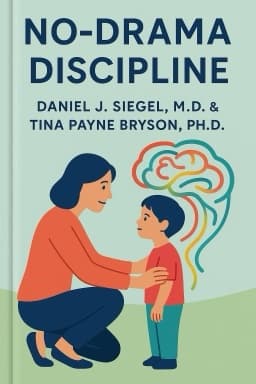
Parenting is a journey filled with questions, especially when it comes to discipline. Why do time-outs and yelling rarely work? Why do kids repeat the same mistakes, no matter how many times we threaten consequences? The answers, surprisingly, lie in your child’s developing brain. No-Drama Discipline, a bestseller by Dr. Daniel J. Siegel and Dr. Tina Payne Bryson, pulls back the curtain on the neuroscience of parenting, offering a fresh, compassionate, and highly effective approach to discipline that every caregiver needs to understand.
The Myth of Punishment
For decades, discipline has been synonymous with punishment. But what if this common wisdom is actually sabotaging our goals as parents? Siegel and Bryson explain that the word 'discipline' comes from the Latin 'disciplina,' meaning 'to teach.' The real purpose of discipline is not to control or shame, but to guide children toward self-regulation, empathy, and resilience. When we punish, we might achieve short-term compliance, but we miss the chance to help our children build the skills they need for a lifetime.
The Developing Brain: Why Kids Can’t “Just Behave”
Children are not miniature adults. Their brains are under construction, with the 'downstairs brain' (responsible for emotions and survival instincts) often overpowering the 'upstairs brain' (where logic, empathy, and self-control live). This means that when a child melts down in the grocery store, it’s not defiance—it’s biology. Neuroscience reveals that the upstairs brain isn’t fully developed until the mid-20s, so expecting perfect self-control from a six-year-old is like asking a toddler to drive a car. Instead, every meltdown is a golden opportunity to teach and connect, wiring the brain for future success. 3
Connection Before Correction
One of the most powerful principles in No-Drama Discipline is 'connection before correction.' When a child is upset, their brain is flooded with stress hormones, making it nearly impossible to learn or cooperate. By connecting first—through empathy, touch, or simply listening—we calm the nervous system and open the door to teaching. For example, instead of scolding a child for hitting, a parent might kneel down and say, 'I see you’re angry. Let’s talk about what happened.' Only after the child feels heard can we guide them toward better choices.
Whole-Brain Strategies: REDIRECT and the 1-2-3 Framework
No-Drama Discipline isn’t just theory—it’s packed with actionable strategies. The REDIRECT approach offers steps like Reducing words, Embracing emotions, Describing neutrally, Involving the child, Reframing mistakes, Emphasizing positives, and Creating repair. The 1-2-3 Framework helps parents pause, wait until the child is ready, and respond with consistency but not rigidity. These frameworks turn discipline from a power struggle into a partnership, where every challenge is a chance to build character. 1
Repair and Resilience: The Gifts of Imperfection
No parent is perfect, and that’s good news. The book emphasizes the importance of repair—admitting mistakes, apologizing, and making amends. This not only heals relationships but teaches children humility and resilience. When parents model self-compassion and repair, children learn to do the same, creating a cycle of trust and emotional safety that lasts a lifetime.
The Legacy of Connection
Perhaps the most hopeful message of No-Drama Discipline is that every family can change its story. By focusing on connection, empathy, and teaching, we lay the foundation for generations of healthy relationships. The journey is ongoing—each day brings new challenges and new opportunities to grow together.
Conclusion
No-Drama Discipline is more than a parenting method—it’s a movement toward compassion, science, and lasting change. By understanding the brain, connecting before correcting, and embracing imperfection, we give our children the greatest gift: the skills and confidence to thrive, no matter what life brings. 2 1 3
Want to explore more insights from this book?
Read the full book summary