
Unmasking Noise: The Invisible Chaos Sabotaging Your Judgments
Explore the science behind noise, how it differs from bias, and the surprising ways it infiltrates our minds and groups.

When you think about errors in judgment, bias probably comes to mind first. Bias is the systematic tilt that pushes decisions consistently in one direction, like favoring a particular candidate or underestimating risks. But lurking alongside bias is a less obvious, yet equally destructive force: noise.
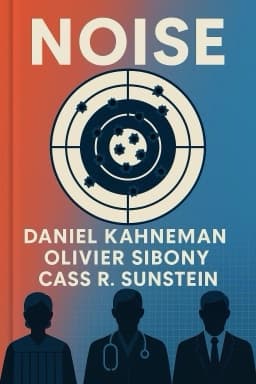
Noise is the random variability in judgments that causes decisions to scatter unpredictably, even when facts are identical. Unlike bias, which is directional, noise is scatter—like shots fired at a target landing all over the place rather than clustering tightly.
Our minds are the instruments of judgment, but they are imperfect and noisy. When you try to estimate probabilities or evaluate evidence, your brain integrates information informally, influenced by selective attention, mood, fatigue, and fleeting contexts. This leads to occasion noise—variability within the same person over time.
Moreover, stable differences among individuals—level noise—and their idiosyncratic responses to specific cases—pattern noise—compound this variability. These components combine to create a complex anatomy of noise that makes judgments unpredictable and unfair.
Group decision-making, surprisingly, often amplifies noise. Early speakers disproportionately influence outcomes, cascades form, and conformity pressures suppress dissent, leading to more erratic group judgments than individual ones.
Fortunately, noise is not destiny. Through noise audits—systematic measurement of variability—organizations can uncover hidden noise. Decision hygiene practices like structured checklists, independent assessments, and aggregation reduce noise substantially.
Balancing noise reduction with the need for discretion involves navigating the trade-offs between strict rules that minimize noise and flexible standards that preserve nuance.
Understanding noise and its roots transforms how leaders, professionals, and individuals approach judgment, fostering cultures that value fairness, accuracy, and continuous improvement.
Want to explore more insights from this book?
Read the full book summary