
Why Noise Is the Hidden Enemy Destroying Your Best Decisions (And How to Fight Back)
Unlock the secret flaws in human judgment that cause chaos in your decisions and learn practical ways to restore clarity and fairness.

Every day, millions of decisions shape our lives—from whether a patient receives the correct diagnosis, to how a judge sentences a defendant, to the premium you pay for insurance. We often assume that experts making these decisions would produce consistent and fair outcomes. Yet, a silent epidemic undermines this assumption: noise. Noise is the random variability in human judgment that causes decisions to scatter unpredictably, even when facts and circumstances are identical.
Unlike bias, which systematically pushes judgments in one direction, noise creates randomness and unfairness. Imagine two judges sentencing the same crime but giving wildly different punishments, or doctors diagnosing the same symptoms with conflicting conclusions. This variability is not just inconvenient—it can be life-altering and costly.
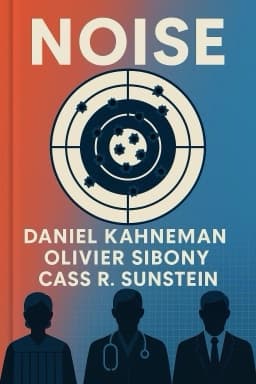
The book Noise: A Flaw in Human Judgment by Daniel Kahneman and his co-authors shines a spotlight on this overlooked problem. They reveal through extensive research and real-world examples how noise pervades domains such as criminal justice, medicine, economic forecasting, and hiring decisions.
One striking case involved asylum seekers whose approval chances ranged from 5% to 88% depending on the judge assigned. Another showed insurance underwriters quoting premiums that varied by over 50% for identical policies. These examples illustrate how noise operates like a hidden lottery, injecting randomness into critical decisions.
The authors break down noise into three components: level noise (stable differences in average severity among judges), pattern noise (case-specific disagreements), and occasion noise (transient fluctuations within individuals due to mood, fatigue, or context). Together, these create a complex web of variability that challenges fairness and accuracy.
Recognizing noise is the first step toward improvement. The book introduces the concept of decision hygiene—practical methods to reduce noise such as structured judgment protocols, independent assessments, and aggregating multiple opinions. These tools help organizations and individuals cleanse noise without losing valuable human insight.
However, reducing noise is a balancing act. Strict rules and algorithms minimize variability but risk rigidity and loss of nuance. Flexible standards preserve discretion but increase noise and unpredictability. The authors advocate for thoughtful calibration to achieve fairness, accuracy, and dignity.
Ultimately, noise reduction is a collective journey requiring organizational commitment, cultural change, and continuous effort. The promise is profound: fairer justice, better healthcare, improved business decisions, and restored trust in institutions.
By uncovering the invisible flaw of noise and offering a roadmap to combat it, this book empowers readers to transform their own judgments and those around them. In a world overwhelmed by data and complexity, mastering noise is key to clearer, kinder, and wiser decisions.
Want to explore more insights from this book?
Read the full book summary