
How a Failed Credit Card System Sparked a Revolution in Organizational Design
Discover the untold story behind VISA’s creation and the birth of a new way to think about organizations — blending chaos and order for unprecedented success.

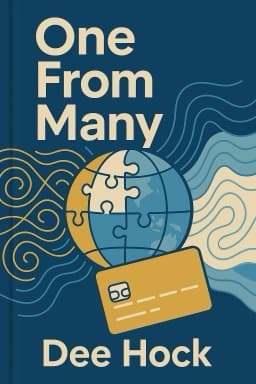
Imagine an institution so vast that it serves billions of people worldwide, yet it began as a chaotic, failing credit card system in the late 1960s. This is the story of VISA, but more importantly, it is the story of how a new organizational model was born from the ashes of failure — a model that blends chaos and order to create what Dee Hock called a 'chaordic' organization.
The traditional institutions of the 20th century operated like machines — hierarchical, rigid, and obsessed with control. These mechanistic organizations worked well in predictable environments but faltered when faced with complexity and change. Schools, governments, and corporations found themselves unable to adapt, leading to widespread institutional failure. Dee Hock recognized this crisis and sought a different path.
Born from his personal experience growing up in rural Utah, Hock brought a unique perspective — blending humility, optimism, and a deep understanding of human nature. He envisioned organizations not as machines but as living systems governed by purpose and principles rather than command and control. This vision was radical in an era dominated by top-down management.
Central to this new model was the idea of chaordic organizations — systems that balance chaos and order, allowing self-organization within a framework of shared purpose. This balance enables adaptability, innovation, and resilience. The financial network Hock led embraced member ownership, distributed governance, and a constitution of principles, defying conventional corporate norms.
However, the journey was not without struggle. Legal battles, cultural resistance, and failed projects tested the organization’s resolve. Yet, these challenges reinforced the importance of purpose-driven leadership and adaptive governance. Mistakes of omission, or failing to act, proved more dangerous than mistakes of commission, highlighting the need for courage and learning.
Leadership itself was redefined — no longer about command but about educing positive behavior through mutual respect and self-management. Leaders became enablers, fostering trust and collaboration rather than enforcing control. This shift created living communities where power flowed dynamically and everyone contributed to shared goals.
As technology advanced, the collapse of traditional boundaries accelerated. Microelectronics, data, and communication networks created unprecedented interconnectivity, demanding new organizational forms that could manage complexity across cultures and geographies. Trust, tolerance, and shared principles became essential for global governance.
At the core of chaordic organizations lie purpose and principles — the genetic code that aligns members and guides behavior flexibly. Unlike rigid rules, principles empower judgment and creativity within an ethical framework, fostering resilience and innovation.
Governance shifted from command to consensus — not unanimity but solidarity — supported by a culture of trust, transparency, and continuous learning. These living communities embody democracy as an ongoing practice, distributing power and nurturing human potential.
Looking forward, the democratic age of organizations offers hope for sustainable futures. Aligning institutions with nature and human spirit is not just idealistic but necessary for survival. Chaordic organizations provide a blueprint for restoring harmony between society and the biosphere.
This story is more than history; it is a call to action. As individuals and leaders, we are invited to embrace complexity, foster trust, and design organizations as living systems that serve life and dignity. The journey of 'One From Many' continues to inspire those seeking transformative change in a turbulent world.
For anyone interested in leadership, organizational innovation, or the future of society, 'One From Many' offers profound insights and practical wisdom. It challenges us to rethink what organizations are and what they can become — not machines, but living communities that thrive through shared purpose and adaptive governance.
References and further reading include detailed reviews and summaries available on Goodreads, Amazon, and insightful blogs by thought leaders who have engaged deeply with Hock’s work. These sources enrich our understanding and show the continuing relevance of chaordic principles in today’s complex world.
Explore the full journey, and let these ideas inspire your own path toward building resilient, humane organizations in an ever-changing landscape.
1 2 3 4
Want to explore more insights from this book?
Read the full book summary