
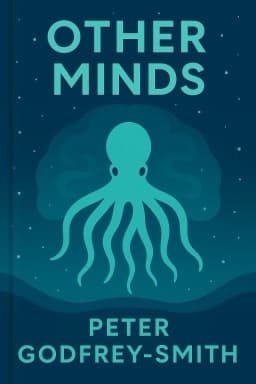
Why Octopuses Might Be the Smartest Aliens on Earth
Discover how octopuses evolved intelligence in a way that makes them seem like extraterrestrial beings living among us.

Discover how octopuses evolved intelligence in a way that makes them seem like extraterrestrial beings living among us.
When you think of alien intelligence, your mind might leap to distant planets or science fiction. But look beneath the waves, and you’ll find a creature whose intelligence seems almost otherworldly: the octopus. These soft-bodied invertebrates possess a nervous system so unique and complex that scientists often describe them as 'aliens of the sea.'
Unlike vertebrates, octopuses evolved large brains independently, with more than half of their neurons located in their eight arms. Each arm can perform complex movements and sensory processing autonomously, allowing for multitasking and sophisticated manipulation without constant central control.
This decentralization means an octopus can explore, taste, and grasp with arms that almost have minds of their own. It’s as if the body itself holds intelligence distributed throughout, a concept that challenges the traditional brain-centered view of cognition.
Octopuses also exhibit remarkable problem-solving abilities. They open jars, navigate mazes, use tools, and even display playful antics like squirting water jets to turn off aquarium lights. These behaviors suggest curiosity, learning, and creativity uncommon among invertebrates.
Socially, octopuses are mostly solitary but can show surprising interactions in dense communities. They recognize individual humans, communicate through dynamic skin color changes, and display distinct personalities, from shy to bold. This individuality adds depth to their cognitive profile.
Despite these advanced behaviors, octopuses live short lives, typically one to two years. This paradox of high intelligence paired with brief lifespan is explained by evolutionary trade-offs and ecological pressures, including their semelparous reproduction strategy.
Studying octopuses expands our understanding of what intelligence can be, revealing that evolution has crafted multiple paths to complex cognition. They remind us that intelligence is not a single trait but a diverse spectrum shaped by environment, body plan, and survival needs.
Next time you gaze into the ocean depths, remember the alien minds swimming silently below, masters of disguise and cunning, inviting us to rethink the nature of intelligence itself.
References: Goodreads, Amazon, Words and Dirt, LA Times 1 2 3 4
Want to explore more insights from this book?
Read the full book summary