
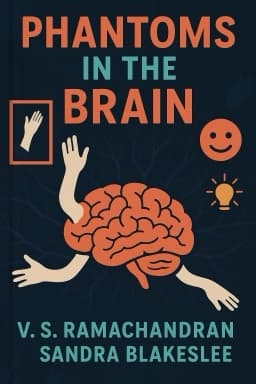
Phantom Limbs and the Brain’s Magical Plasticity: How Our Minds Rewrite Reality
Discover how the brain’s remarkable ability to rewire itself creates sensations of limbs that no longer exist—and what this means for healing and human perception.

Introduction to Phantom Limb Phenomenon
Imagine waking up one day feeling an itch on a hand that no longer exists. This is the perplexing reality for many amputees who experience phantom limb syndrome. Far from being a mere illusion, this phenomenon reveals the brain’s deep-rooted body maps that persist even after physical loss.
Neural Mechanisms Behind Phantom Limbs
Research has shown that after amputation, the brain undergoes cortical reorganization. Areas adjacent to the missing limb’s sensory region in the cortex begin to take over, leading to referred sensations. For example, touching the face can evoke sensations in the phantom hand, due to the close cortical proximity of face and hand areas. This
Moreover, many patients can voluntarily move their phantom limbs, indicating that motor commands continue despite the limb’s absence. This suggests that the brain’s internal body schema remains intact and active, offering a window into the neural basis of body awareness.
Therapeutic Innovations: Mirror Therapy
One of the most elegant applications of this knowledge is mirror therapy. By placing a mirror to reflect the intact limb, patients see a visual illusion of the missing limb moving in synchrony. This visual feedback can alleviate phantom pain and restore a sense of control.
Broader Implications for Neuroscience and Consciousness
The study of phantom limbs not only aids rehabilitation but also challenges our understanding of perception and consciousness. It shows that the brain actively constructs our experience of the body, integrating sensory input, memory, and motor commands into a coherent sense of self. This construction is dynamic and adaptable, highlighting the fluid boundary between mind and body.
As we continue to explore the brain’s mysteries, phantom limbs stand as a testament to the power of neuroplasticity and the brain’s ability to rewrite reality itself.
For further reading, explore the pioneering research by V.S. Ramachandran and colleagues, and recent reviews on cortical remapping in amputees 1 , 2 , 4 .
Want to explore more insights from this book?
Read the full book summary