
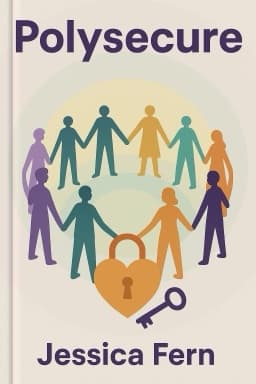
Boundaries, Healing, and the Nested Model: Redefining Safety in Modern Love
How Polysecure’s Nested Model Changes the Way We Think About Safety and Growth

How Polysecure’s Nested Model Changes the Way We Think About Safety and Growth
In a world where relationships are more diverse and complex than ever, safety and healing can feel elusive. Jessica Fern’s Polysecure introduces the nested model—a revolutionary way to understand how boundaries and attachment operate at every level of our lives. Imagine a series of concentric circles: at the center is you, surrounded by your relationships, home, community, society, and the collective. Healing and wounding ripple through each layer, shaping how we love and connect.
Fern argues that boundaries are not static. “Boundaries are the architecture of safety,” she writes, emphasizing that the healthiest boundaries are those that protect without isolating and connect without overwhelming. Whether you’re renegotiating agreements after a rupture or learning to say no with compassion, boundaries are essential for resilience and intimacy.
The nested model also highlights the importance of collective healing. Trauma doesn’t just live in individuals—it’s passed down through families, embedded in communities, and shaped by societal forces. Fern’s approach encourages us to seek healing not only within ourselves but also in our relationships and the wider world. Real-life examples show how families, polycules, and communities can create rituals of connection and support, strengthening every layer in the nest.
If you’re ready to rethink boundaries and embrace healing at every level, Polysecure’s nested model offers a hopeful, practical roadmap. Safety is not a solo project—it’s a shared journey.
Want to explore more insights from this book?
Read the full book summary