
How COVID-19 Became a Time Machine: Why the Pandemic Fast-Forwarded Our Future
Discover how a global crisis compressed decades of change into a matter of weeks—and what it means for your future.

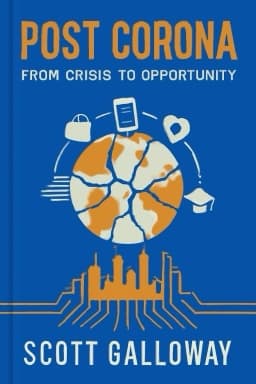
Imagine waking up to a world that looks nothing like the one you went to sleep in. Streets are empty, offices are dark, and every interaction—work, school, even family gatherings—has moved online. This is not a dystopian novel; it’s the reality billions experienced in early 2020. According to Scott Galloway in his book Post Corona, the pandemic didn’t just disrupt our lives—it accelerated them, acting as a time machine that pushed us a decade into the future in a matter of months.
The numbers are staggering: e-commerce adoption that should have taken ten years happened in eight weeks. Remote work, once a privilege for the few, became the norm for millions. Digital education and telehealth, long resisted by institutions, were embraced out of necessity. But why did this happen? Galloway argues that crisis is the greatest accelerant. When survival is at stake, even the most resistant organizations are forced to adapt or die.
This acceleration wasn’t limited to business. Our relationships, sense of community, and even our perception of time were fundamentally altered. Days blurred together, but progress leapt ahead. Companies that had invested in digital infrastructure surged ahead, while those clinging to the old ways vanished almost overnight. The lesson? In the post-corona world, adaptability trumps tradition.
For individuals, this means a new focus on lifelong learning, digital skills, and mental flexibility. For businesses, it means embracing change as a constant and being willing to disrupt yourself before someone else does. As Galloway puts it, the future isn’t just coming faster—it’s already here. Will you keep up, or be left behind?
Sources: Scott Galloway, Post Corona; Blinkist summary
1
; 5 Minute Book Summary
2
; Bookey.app
3
Want to explore more insights from this book?
Read the full book summary